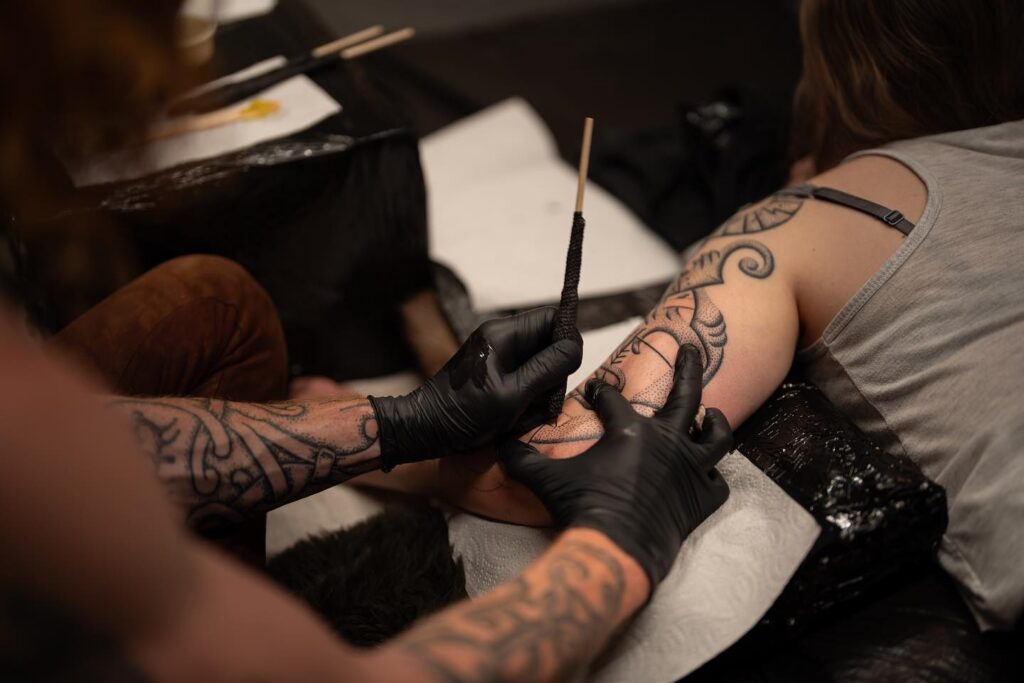

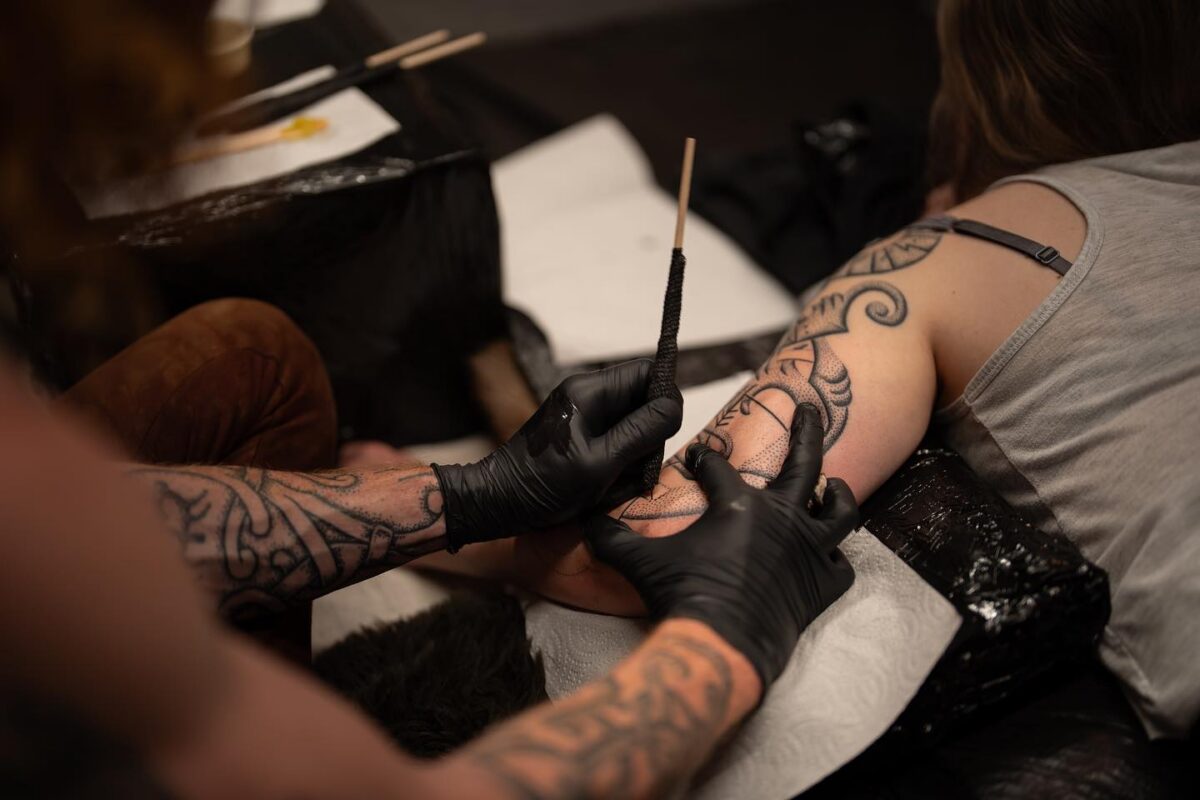
Tattooing without a machine is not a modern alternative to machine tattooing. It is, in fact, one of the oldest methods of permanently marking the skin. Long before the invention of the electric tattoo machine, tattoos were created entirely by hand. Across different cultures and periods, a wide variety of tools were used for this purpose, including thorns, sharpened bone, wood, and other natural materials. Although these methods differed considerably, they shared the same fundamental principle. The pigment was introduced into the skin through a series of deliberate, individual dots.
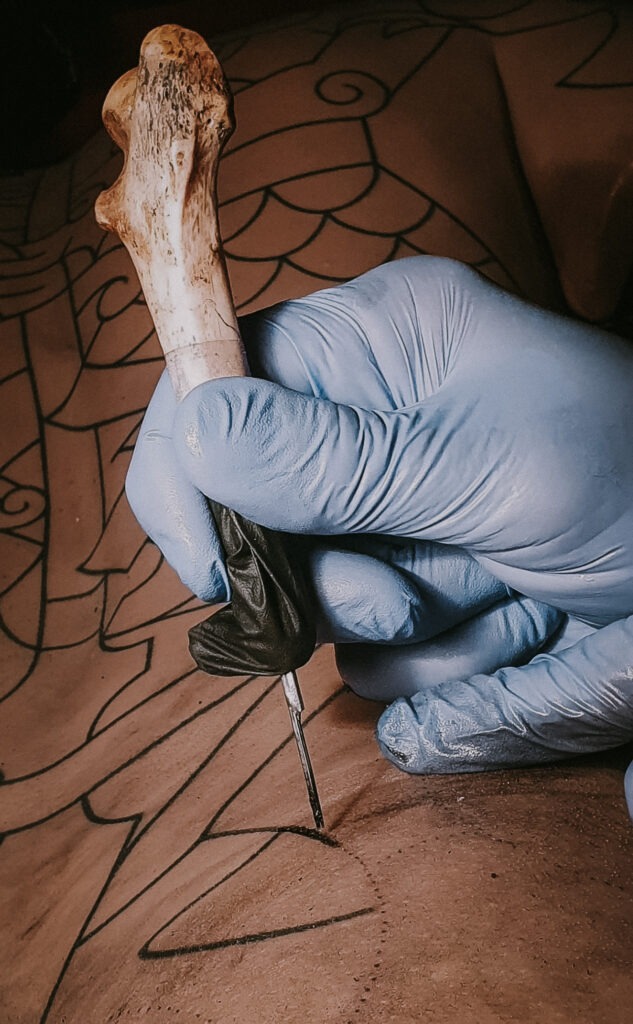
Modern handpoke tattooing follows this same basic principle while using contemporary materials and professional standards. Sterile tattoo needles and professional tattoo pigments are used, just as they may be in machine tattooing. The fundamental difference is therefore not necessarily the needle or the pigment, but the way in which the needle is operated and the pigment is deposited into the skin.
In handpoke tattooing, the needle is guided entirely by hand, without the use of an electric tattoo machine. Each dot I do is made individually, introducing a small amount of pigment into the skin. Only as much as needed to create the picture. Through the accumulation of these individual points, lines, textures, and solid areas are gradually formed into the finished tattoo. The process is slow, deliberate, and highly tactile and even meditating. Every single dot is placed consciously and has its purpose.
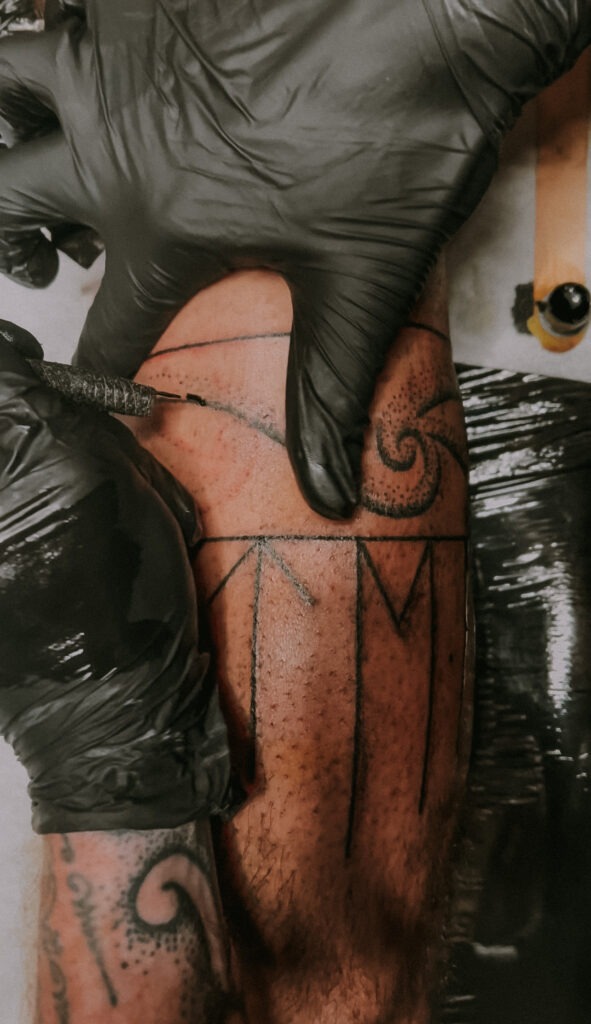
Machine tattooing, by contrast, uses a mechanically driven needle that moves rapidly in and out of the skin. Depending on the machine, its configuration, and the technique being used, the needle may move at a very high frequency, allowing hundreds of individual punctures to be made within a short period of time. In handpoke tattooing, there is no continuous mechanical movement. The rhythm of the work is instead determined entirely by the hand of the tattooer.
This difference creates a distinct working process. Handpoke tattoos can require more time to complete, particularly when working with larger or highly detailed designs. At the same time, the slower pace allows the tattooer to directly control every individual puncture, including its placement, angle, depth, and spacing. For many practitioners, this direct relationship between hand, needle, and skin is an essential part of the craft.
The way the skin is treated can also differ. Because handpoke tattooing does not involve a rapidly oscillating needle moving continuously across the same area, the mechanical stress placed on the skin can, when performed correctly, be comparatively limited. This should not be understood to mean that handpoke tattooing is painless or inherently gentler in every situation. The condition of the skin after a tattoo depends on many factors, including needle choice, technique, depth, pressure, the number of passes over an area, the design itself, and the individual’s skin. Professional tattooing therefore requires careful technique and a thorough understanding of how the skin responds and heals, regardless of the method used.
Historically, handpoke tattooing is perhaps better understood not as an alternative to tattooing, but as a continuation of one of its original forms. The materials, hygiene practices, and tools used today are fundamentally different from those available to tattooers centuries or millennia ago. The underlying principle, however, remains similar, because the pigment is placed into the skin through repeated, controlled punctures made by hand.
The term “stick and poke” is sometimes used informally to describe this method. While widely understood, it is a more casual and negative expression and does not fully reflect the craftsmanship, respect or historical depth of the practice. Terms such as “handpoke,” “hand-poked tattooing,” or “machine-free tattooing” more accurately describe the technique itself.
Handpoke tattooing is not machine tattooing performed at a slower speed. It is a distinct way of working in which the entire process is governed by the movement of the hand. Every dot, line, and passage of pigment is created individually. The slower rhythm becomes part of the method itself, connecting contemporary tattoo practice with a tradition that predates the electric tattoo machine by thousands of years.
Modern handpoke tattooing combines an ancient principle with contemporary materials, knowledge, and hygiene standards.
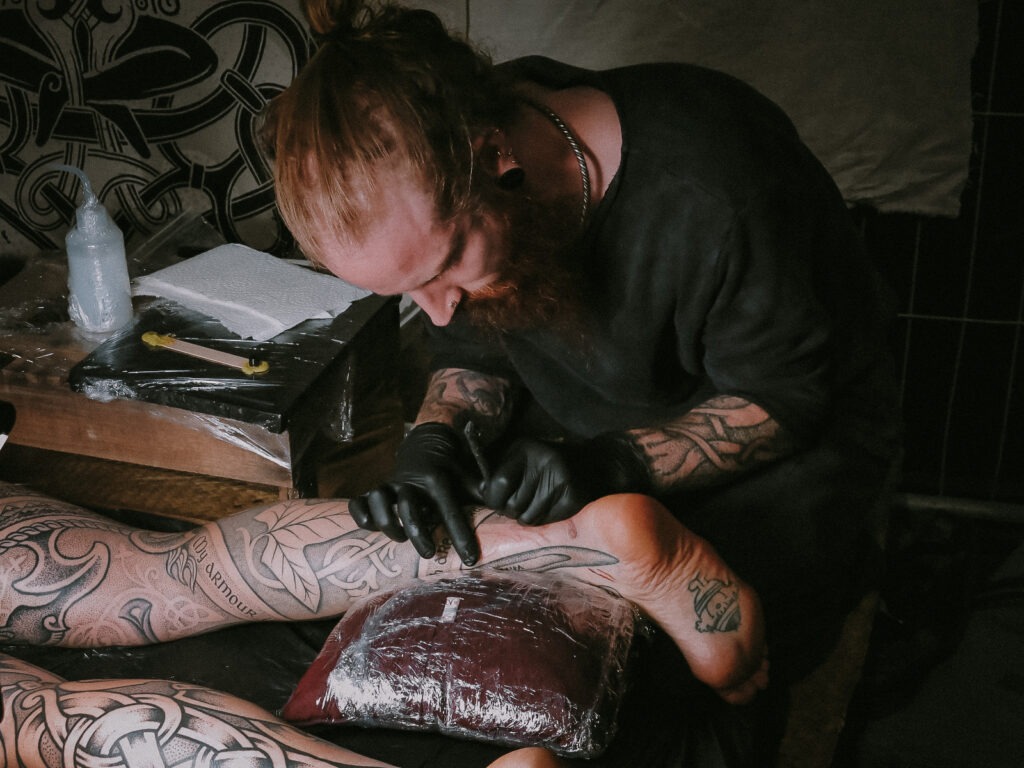
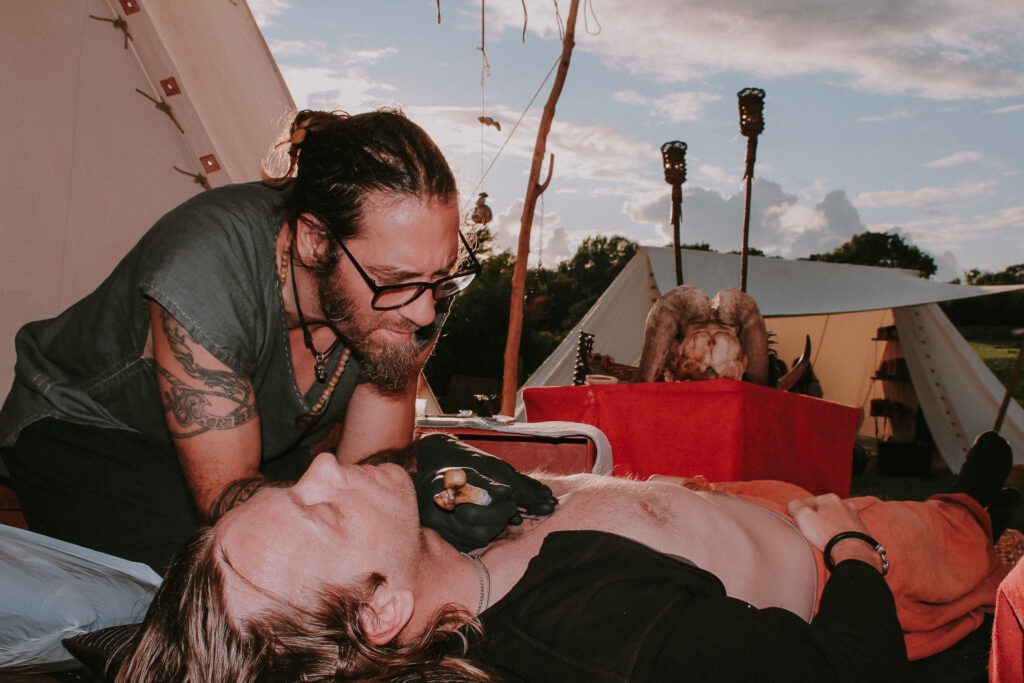
This is Colin Dale | Skin & Bone tattooing on the Historical Market in Copenhagen.