Traditional Nordic Tattoo in Sweden. Visit us 50 minutes from Gothenburg, Landvetter Airport in Svenljunga (Västra Götaland) Sweden. Handpoke or Machine Tattoos.
Book your outdoor experience with us in Germany and Sweden. Firewalk and Traditional Tattooing. Visiting Runestones, Grave mounds and the stunning nature of Sweden.
Nordische Tätowierungen im Süden Deutschlands. Nordic Tattoo in the south of Germany. Visit us at our studio in Birenbach, Germany. Handpoked or Machine Tattoos
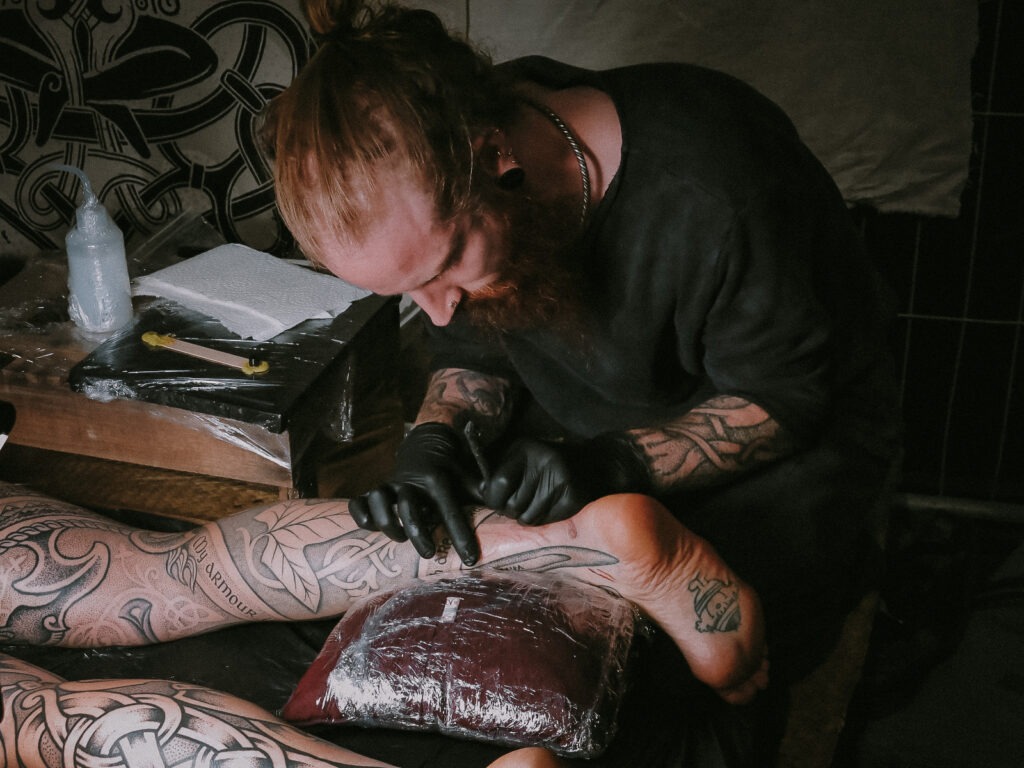
Lukas — Specialized in Handpoke Nordic Tattoos rooted in Nordic Culture, ritual & nature | also machine tattoos
Nordische Tätowierungen von Hand gestochen oder mit Maschine tätowiert in Västra Götaland, Schweden – im Süden von Deutschland, Outdoor Events, Festivals oder klassische Tattoo Conventions.
Every Tattoo is a Ritual – It transforms us, and we move through it. You enter one door and leave as a different person. Where and when you get tattooed matters. It becomes a memory you will never forget. Also your body will remember. Choose wisely where — and from whom — you receive a tattoo. it matters. You need to feel when it is right. Your skin is the storyteller of your life. Choose your path — and walk it.
Nordic Tattoos are not a Trend – They are a cultural heritage. Living traditions expressed through art. Culture is and was never static, always in motion and transition. And everyone who carries it, keeps it alive. You are part of the culture.
Your body is not my canvas – It‘s a living part of you. Its not about me, or any artist. It shows all the scars and tells your story. its not a piece of paper. For me tattooing is like carving images into the skin, to reveal whats already there. To help you to reconnect with yourself and if you feel something when you see my art maybe we kind of „speak the same language“.
Nordic Tattoo made in Sweden and Germany
Aktuelle Tätowierungen und Projekte — Handpoke und Maschinen Tattoos
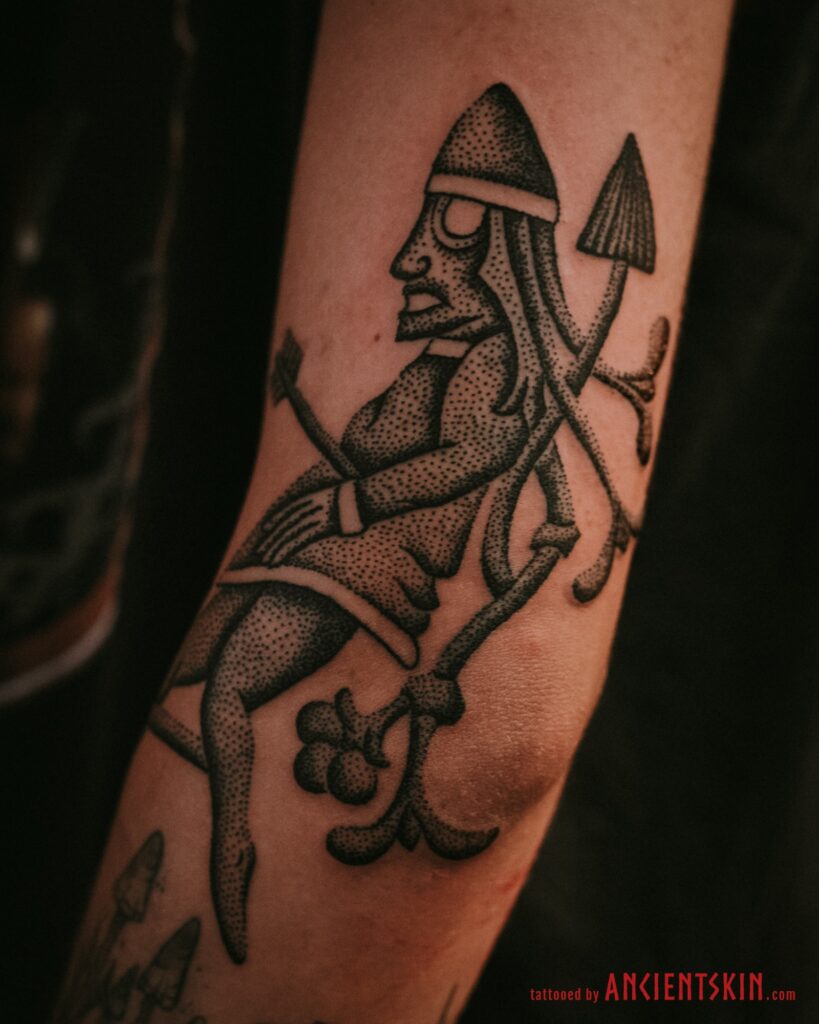
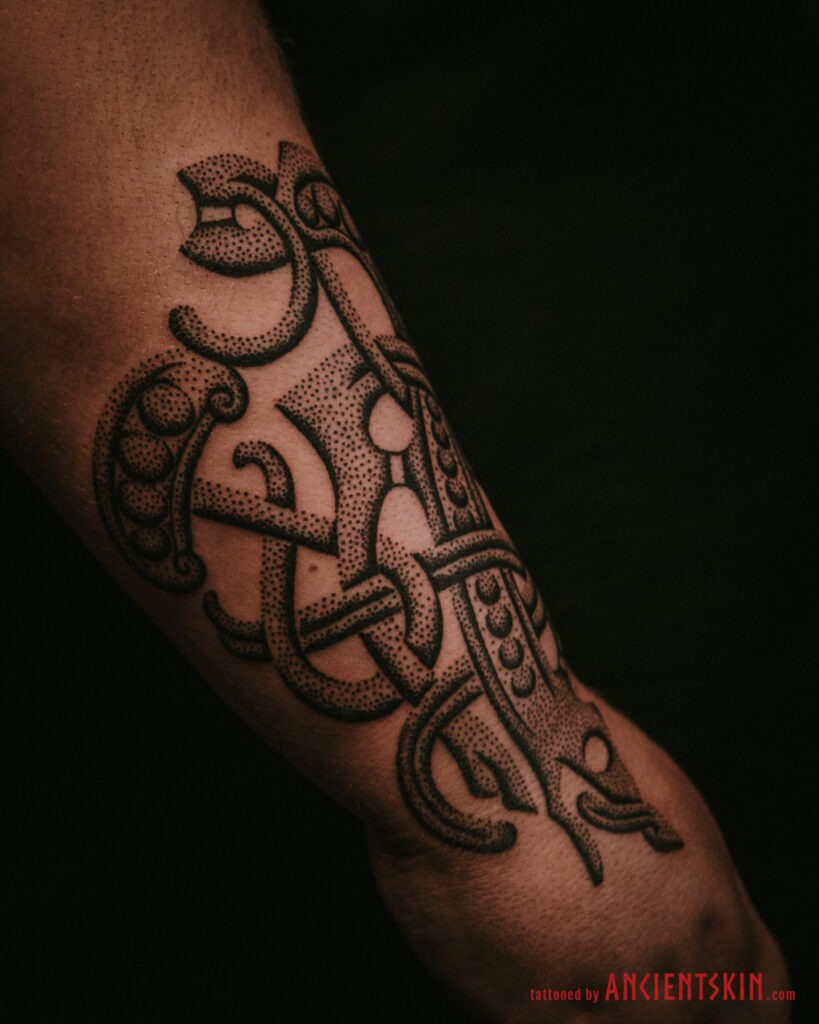
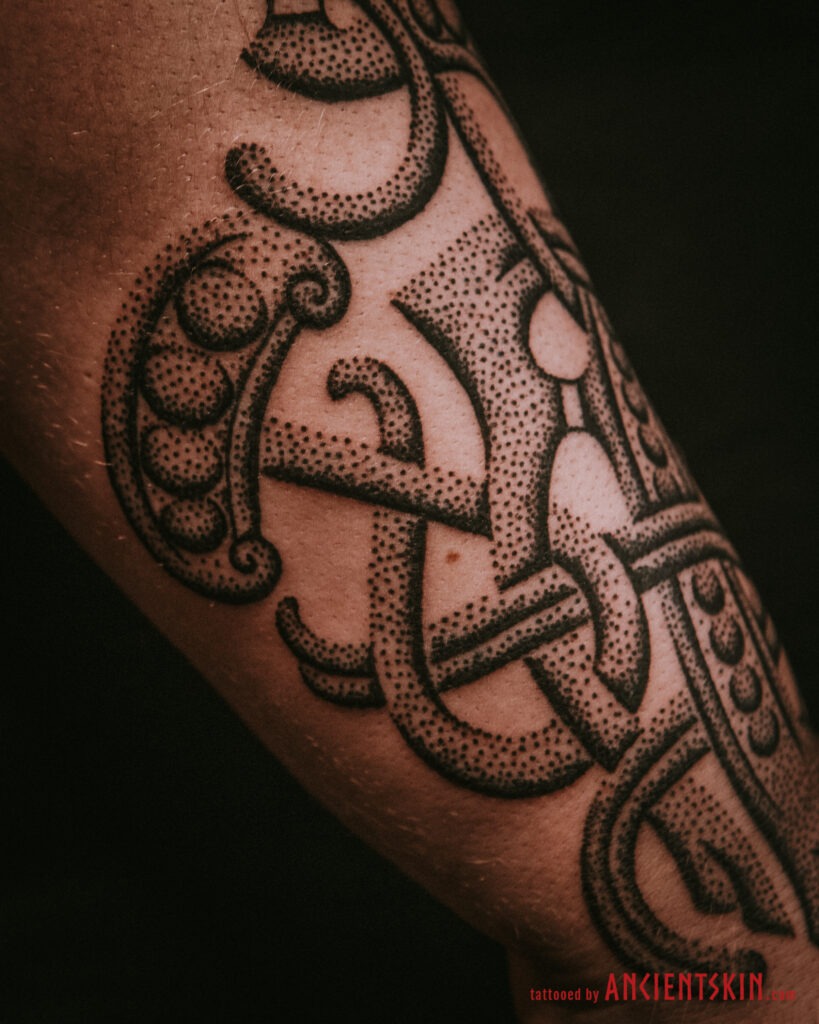
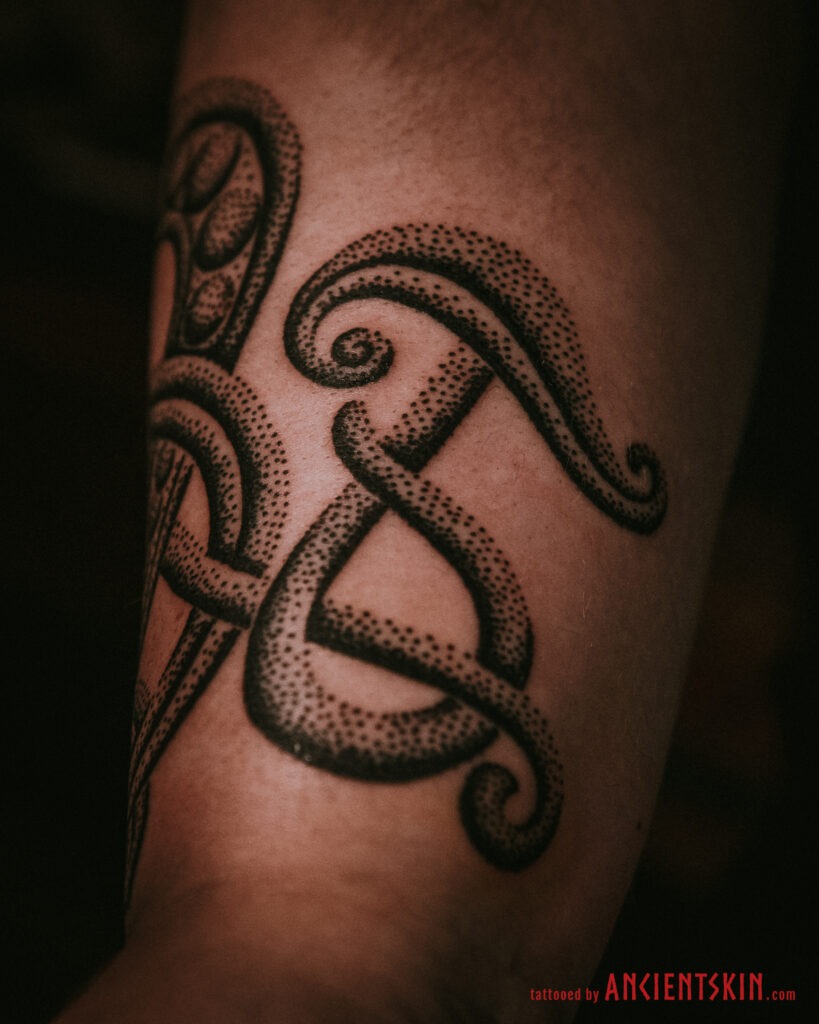
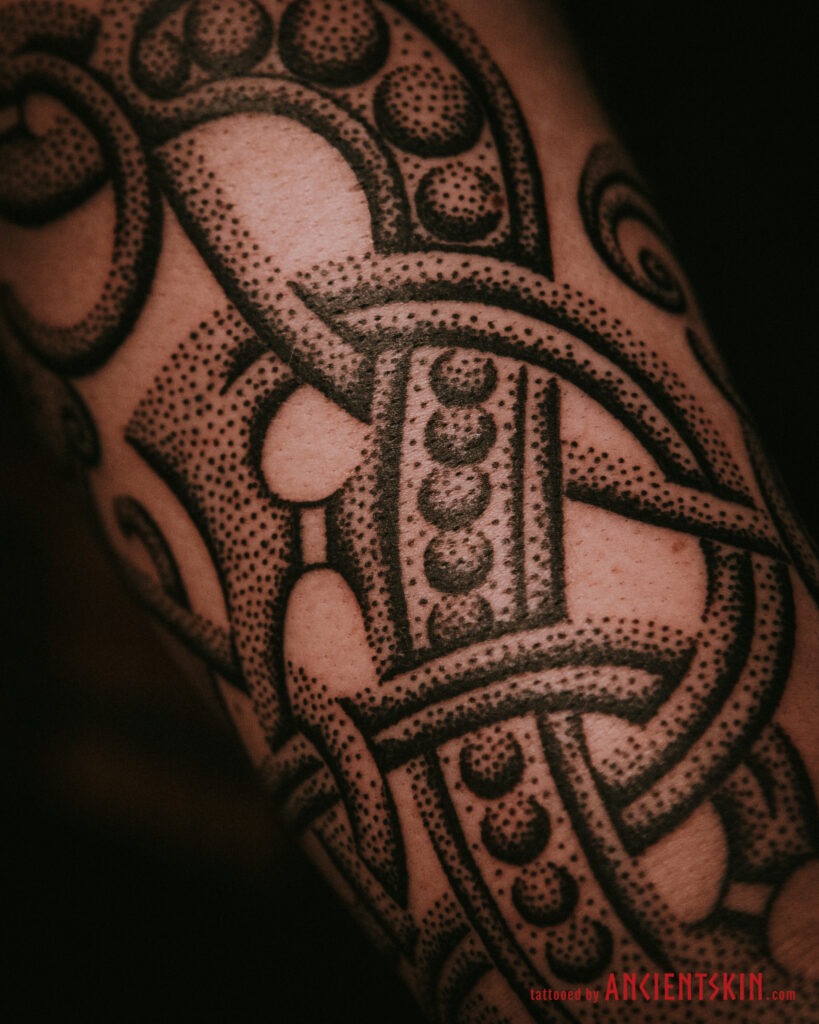
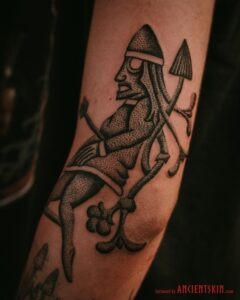
This tattoo pictures Baldr’s death, a further step towards Ragnarok. Baldur’s death serves as the primary catalyst and first major … more
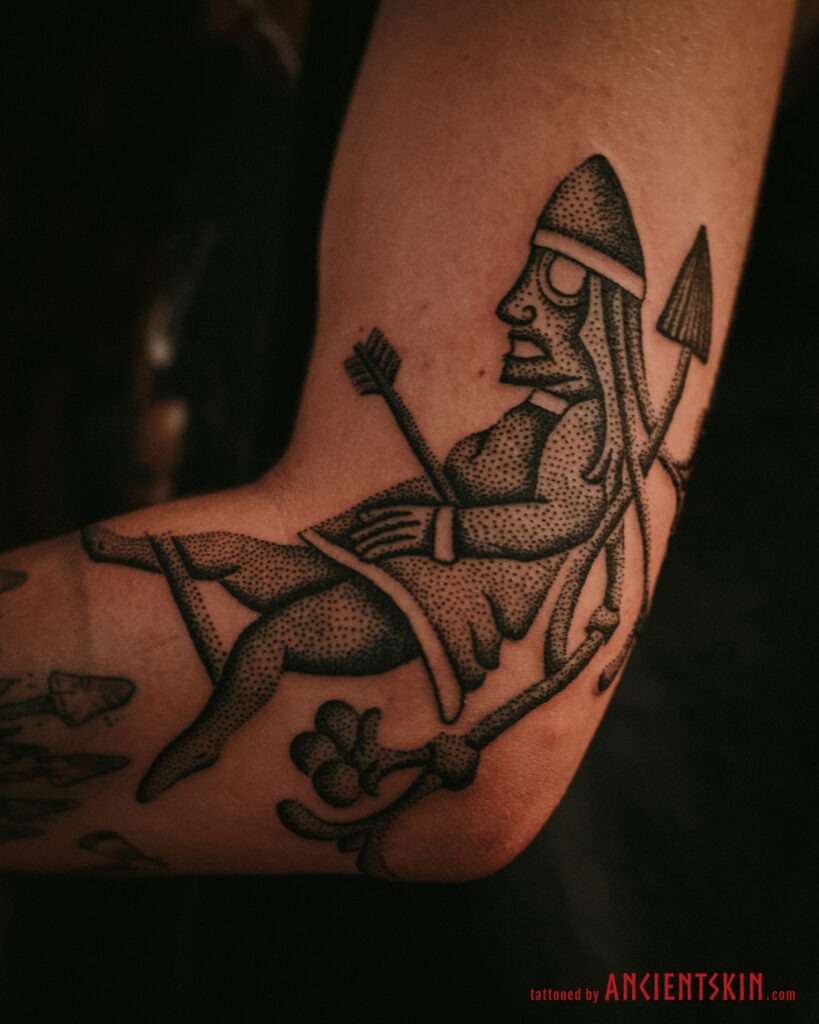
This tattoo pictures Baldr’s death, a further step towards Ragnarok. Baldur’s death serves as the primary catalyst and first major sign of the events leading directly to Ragnarök in Norse mythology. (Baldr is the name in Old Norse language)
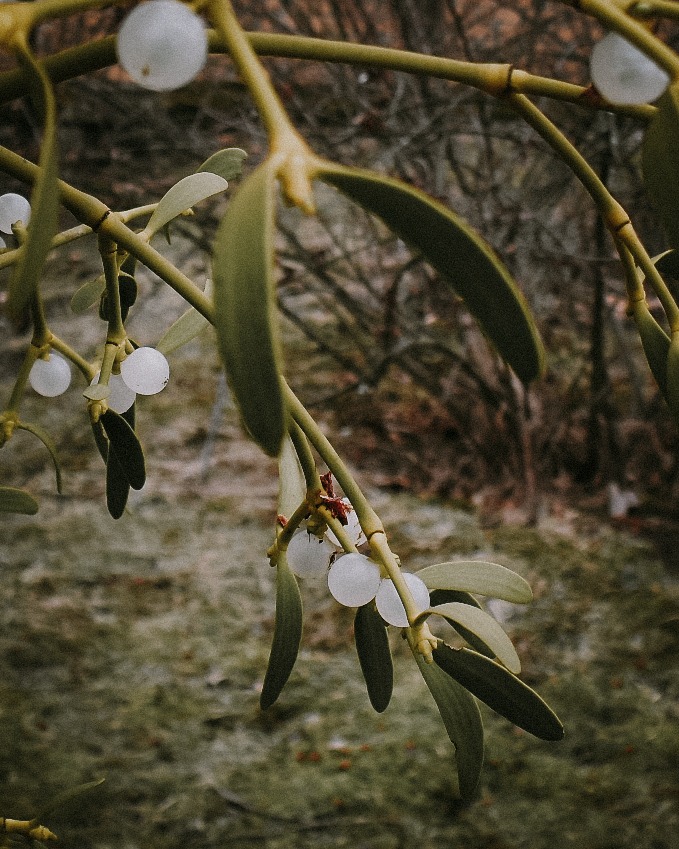
The beloved god of light and son of Odin and Frigg, had nightmares about his own death. Frigg extracted an oath from every living and inanimate thing in existence promising never to harm Baldur, but except for the mistletoe, which she deemed too small and harmless to bother asking. The trickster god Loki discovered this single weakness. He fashioned a dart or spear from Mistletoe and tricked Baldur’s blind brother, Höðr, into throwing it at Baldur, killing him instantly.
Odin sent Hermðr to the underworld (Hel) to plead for Baldur’s return. Hel agreed to release him only if every single thing in the world wept for him. Disguised as a giantess named Þökk (Thökk), Loki refused to cry, leaving Baldur trapped in the underworld. The gods recognized Baldur’s death as the point of no return.
It directly sets off the breakdown of the worlds order and we all experience right now what happens if the order is shattered. But the potential in creating something new after a certain event of death is high.
Ancientskin | Norse & Historical Tattoos | Specialized in Handpoke Tattoos but I also do Machine tattoos. Based in Svenljunga, Västra Götaland, Sweden.
Tattooing without a machine is not a modern alternative to machine tattooing. It is, in fact, one of the oldest … more
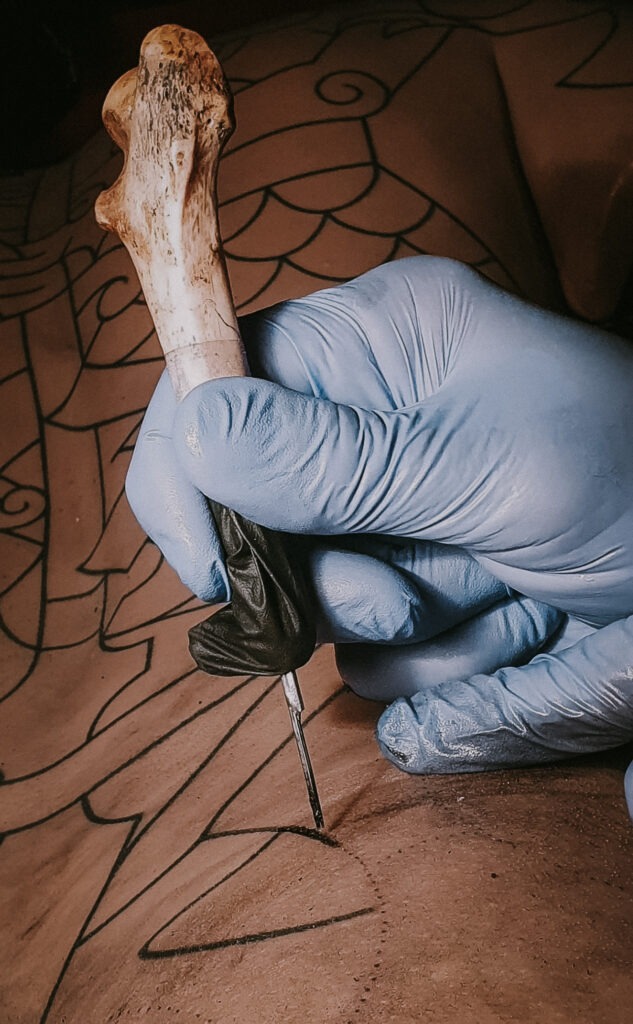
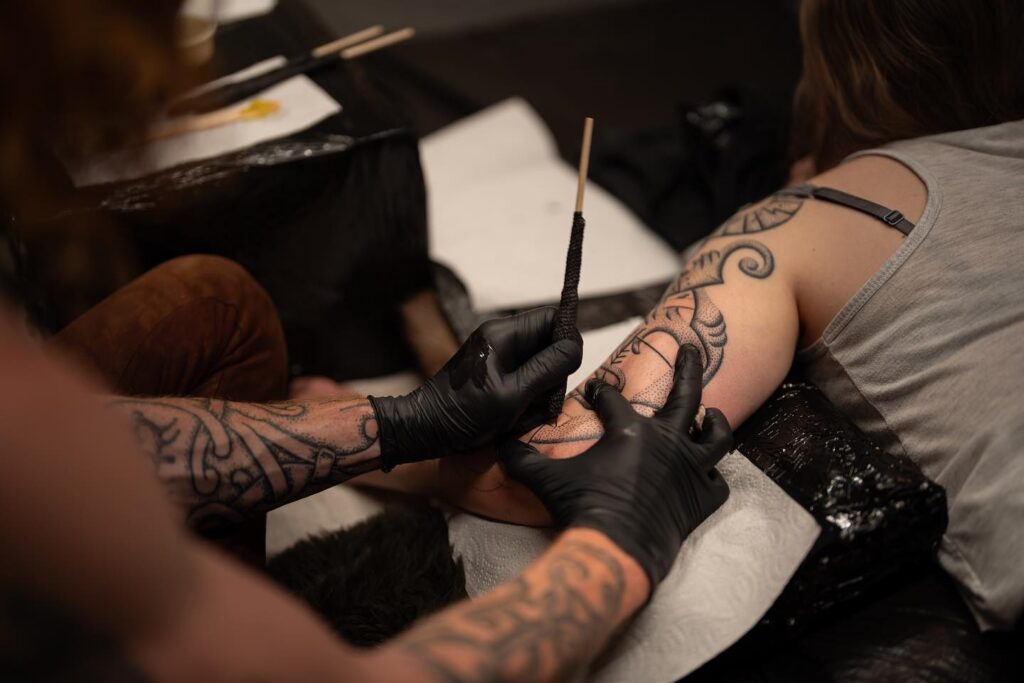
Tattooing without a machine is not a modern alternative to machine tattooing. It is, in fact, one of the oldest methods of permanently marking the skin. Long before the invention of the electric tattoo machine, tattoos were created entirely by hand. Across different cultures and periods, a wide variety of tools were used for this purpose, including thorns, sharpened bone, wood, and other natural materials. Although these methods differed considerably, they shared the same fundamental principle. The pigment was introduced into the skin through a series of deliberate, individual dots.
Colin Dale | Skin & Bone Tattoo Shop in Copenhagen, Denmark
Modern handpoke tattooing follows this same basic principle while using contemporary materials and professional standards. Sterile tattoo needles and professional tattoo pigments are used, just as they may be in machine tattooing. The fundamental difference is therefore not necessarily the needle or the pigment, but the way in which the needle is operated and the pigment is deposited into the skin.
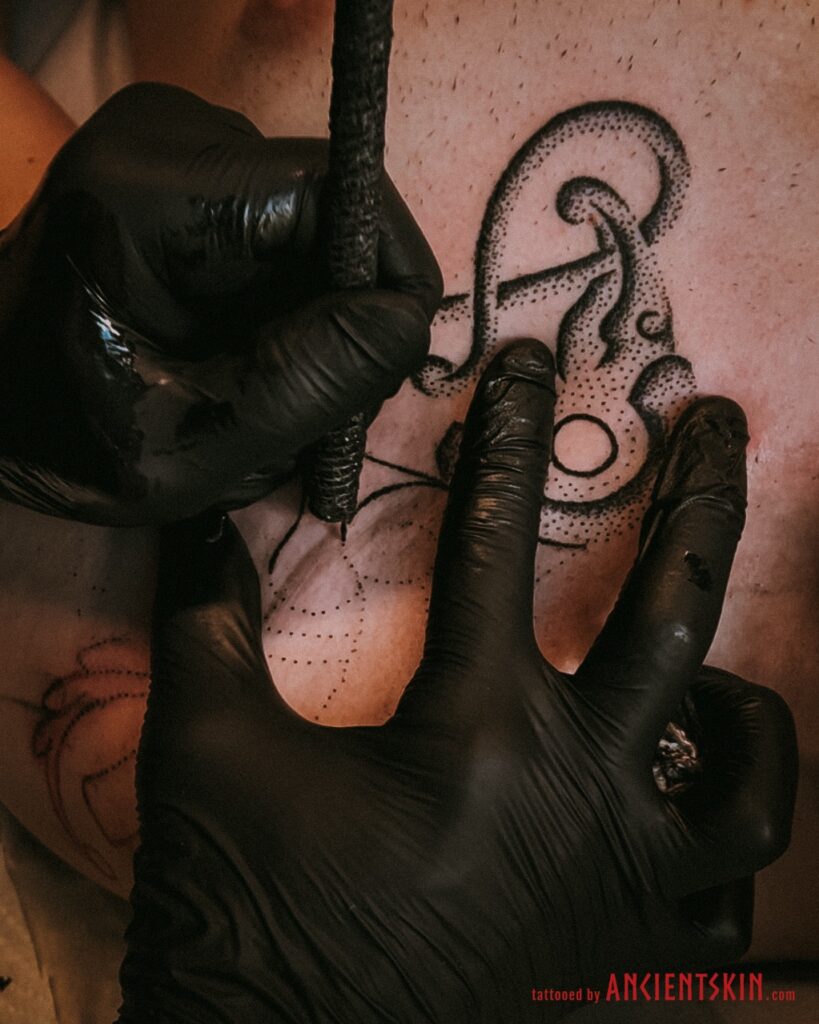
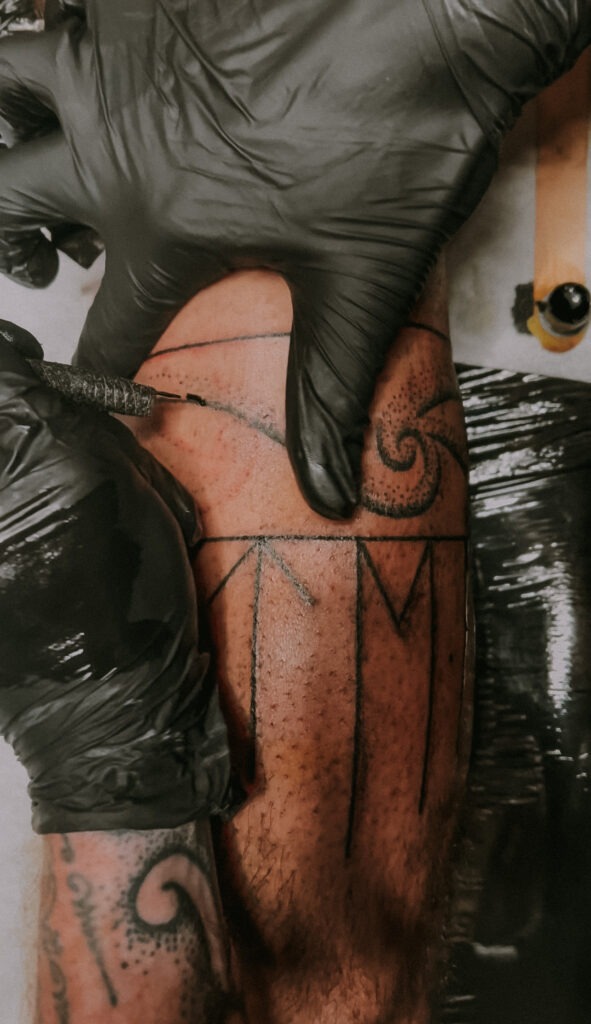
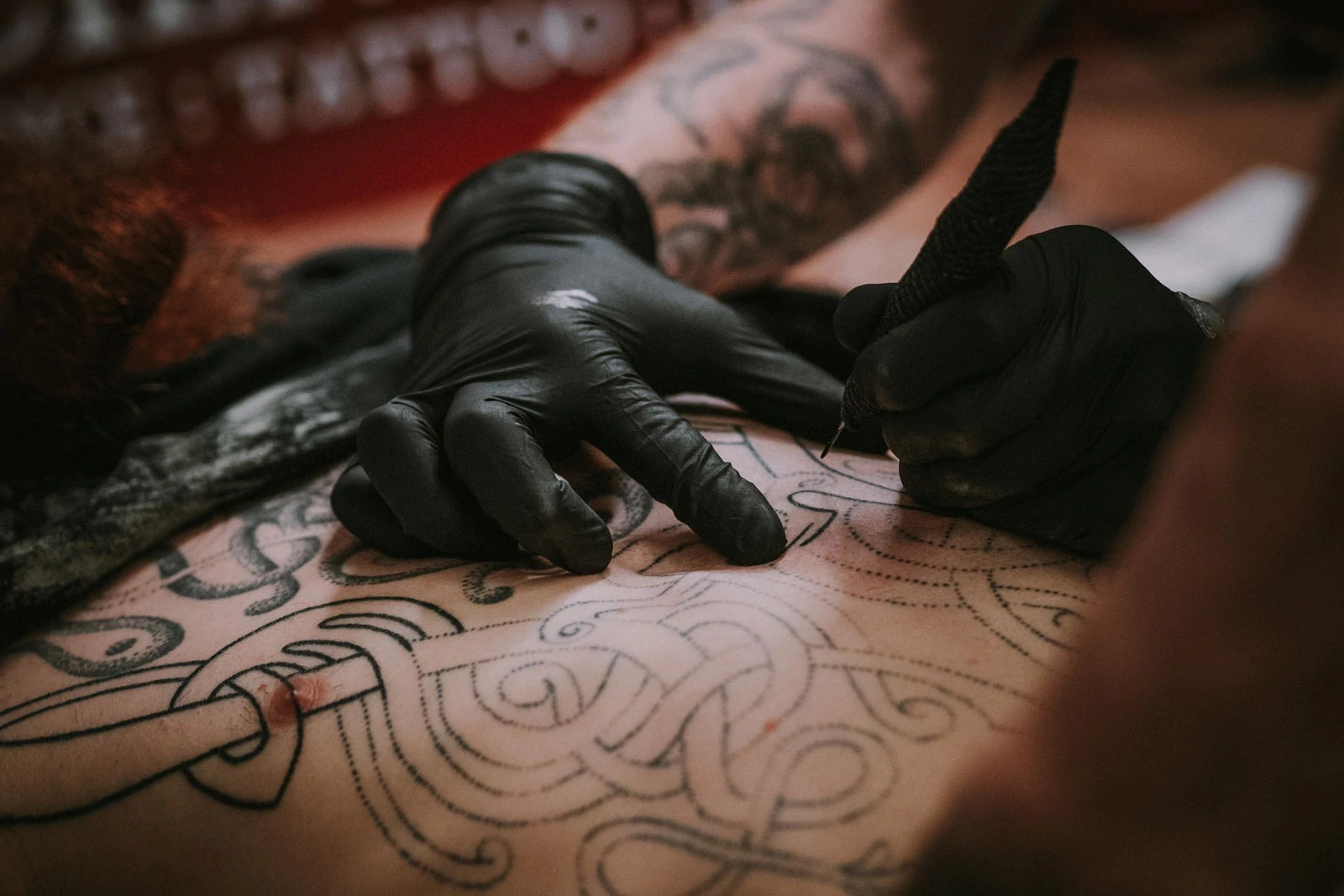
In handpoke tattooing, the needle is guided entirely by hand, without the use of an electric tattoo machine. Each dot I do is made individually, introducing a small amount of pigment into the skin. Only as much as needed to create the picture. Through the accumulation of these individual points, lines, textures, and solid areas are gradually formed into the finished tattoo. The process is slow, deliberate, and highly tactile and even meditating. Every single dot is placed consciously and has its purpose.
Ancientskin Handpoke Tattooing
Machine tattooing, by contrast, uses a mechanically driven needle that moves rapidly in and out of the skin. Depending on the machine, its configuration, and the technique being used, the needle may move at a very high frequency, allowing hundreds of individual punctures to be made within a short period of time. In handpoke tattooing, there is no continuous mechanical movement. The rhythm of the work is instead determined entirely by the hand of the tattooer.
This difference creates a distinct working process. Handpoke tattoos can require more time to complete, particularly when working with larger or highly detailed designs. At the same time, the slower pace allows the tattooer to directly control every individual puncture, including its placement, angle, depth, and spacing. For many practitioners, this direct relationship between hand, needle, and skin is an essential part of the craft.
The way the skin is treated can also differ. Because handpoke tattooing does not involve a rapidly oscillating needle moving continuously across the same area, the mechanical stress placed on the skin can, when performed correctly, be comparatively limited. This should not be understood to mean that handpoke tattooing is painless or inherently gentler in every situation. The condition of the skin after a tattoo depends on many factors, including needle choice, technique, depth, pressure, the number of passes over an area, the design itself, and the individual’s skin. Professional tattooing therefore requires careful technique and a thorough understanding of how the skin responds and heals, regardless of the method used.
Historically, handpoke tattooing is perhaps better understood not as an alternative to tattooing, but as a continuation of one of its original forms. The materials, hygiene practices, and tools used today are fundamentally different from those available to tattooers centuries or millennia ago. The underlying principle, however, remains similar, because the pigment is placed into the skin through repeated, controlled punctures made by hand.
The term “stick and poke” is sometimes used informally to describe this method. While widely understood, it is a more casual and negative expression and does not fully reflect the craftsmanship, respect or historical depth of the practice. Terms such as “handpoke,” “hand-poked tattooing,” or “machine-free tattooing” more accurately describe the technique itself.
Handpoke tattooing is not machine tattooing performed at a slower speed. It is a distinct way of working in which the entire process is governed by the movement of the hand. Every dot, line, and passage of pigment is created individually. The slower rhythm becomes part of the method itself, connecting contemporary tattoo practice with a tradition that predates the electric tattoo machine by thousands of years.
Modern handpoke tattooing combines an ancient principle with contemporary materials, knowledge, and hygiene standards.
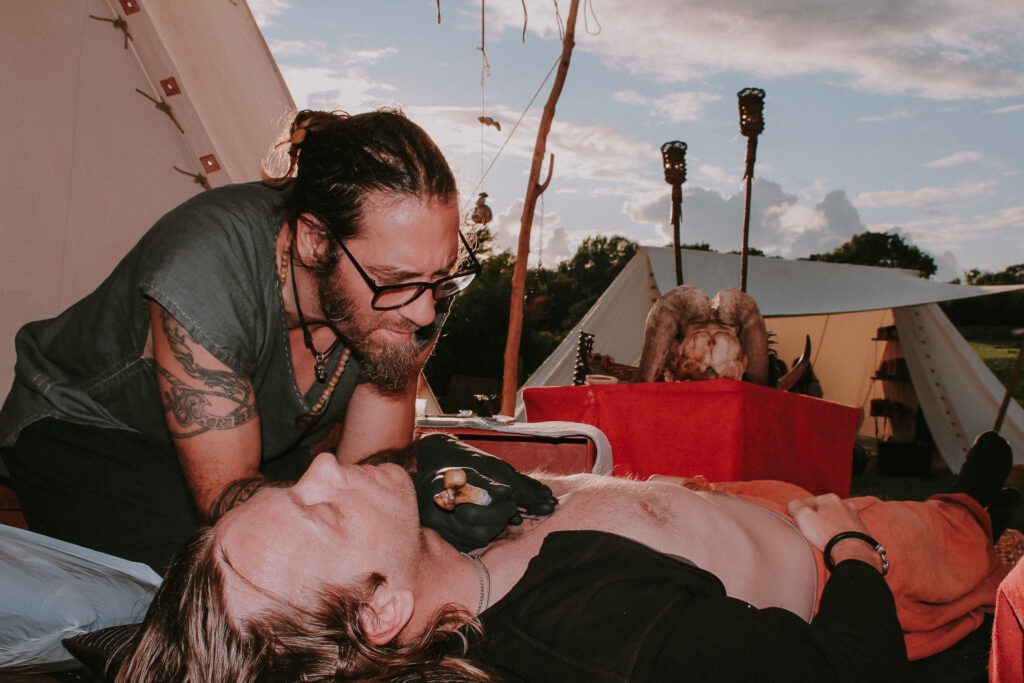
This is Colin Dale | Skin & Bone tattooing on the Historical Market in Copenhagen.
Handpoked Wolf, Runes by machine. This nordic tattoo was made for a lovely guy from france coming all the way … more
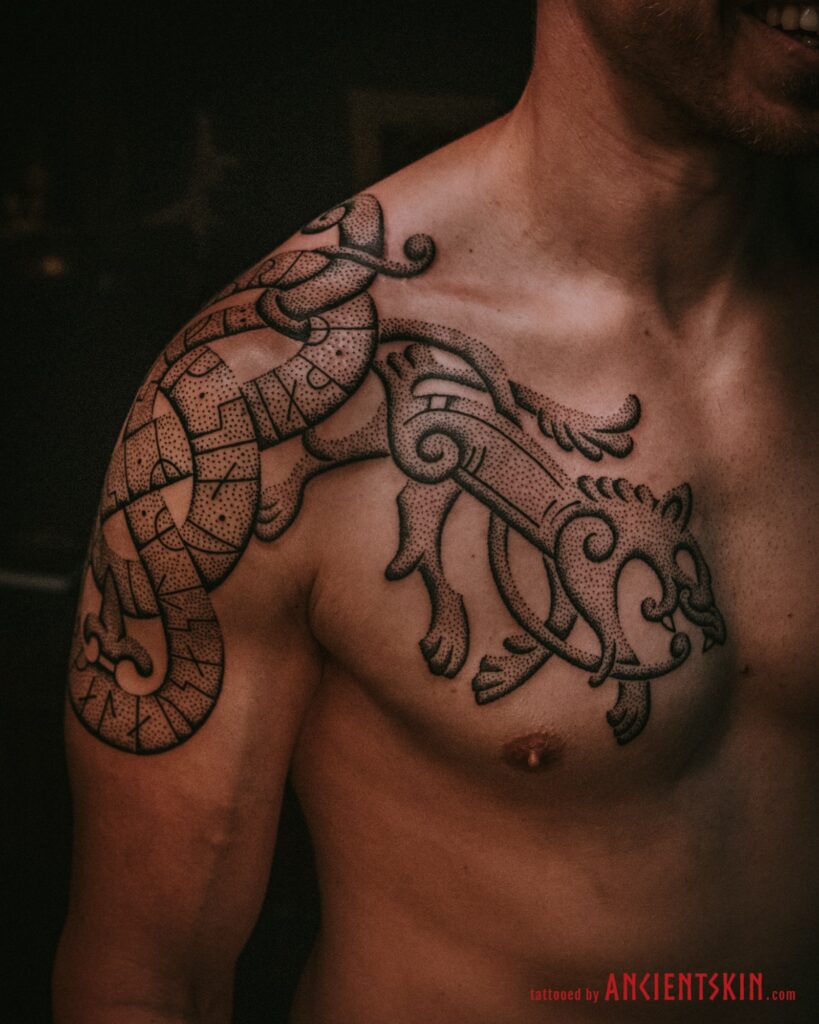
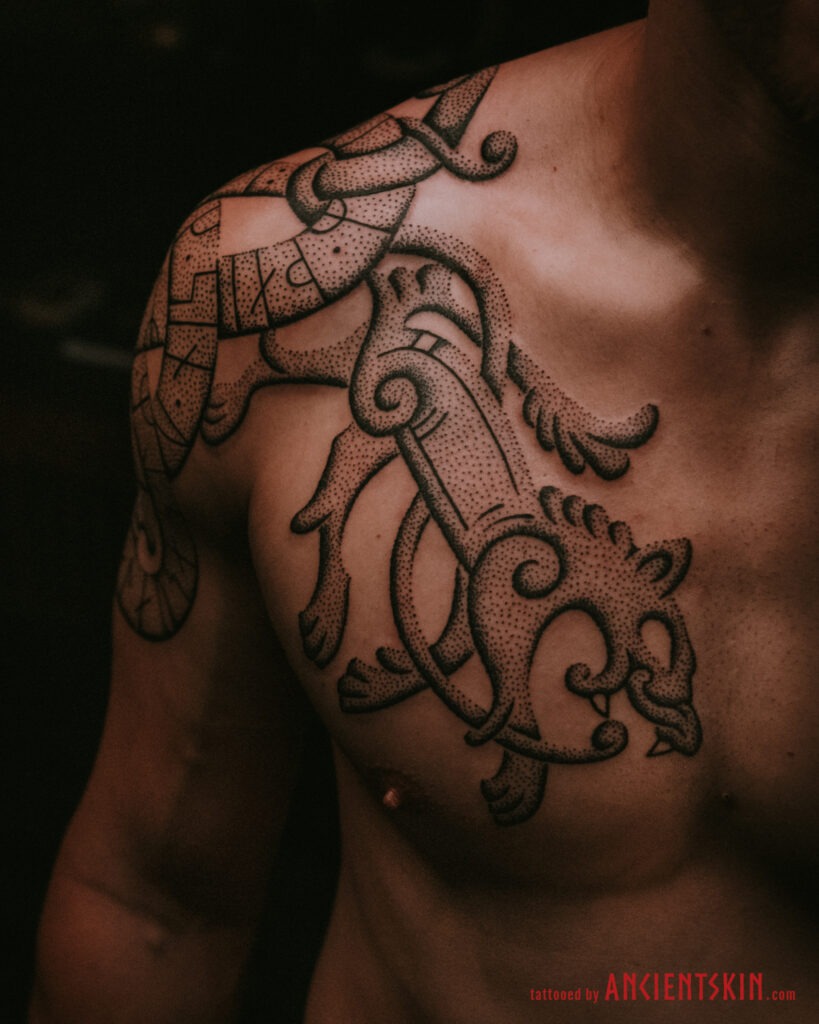
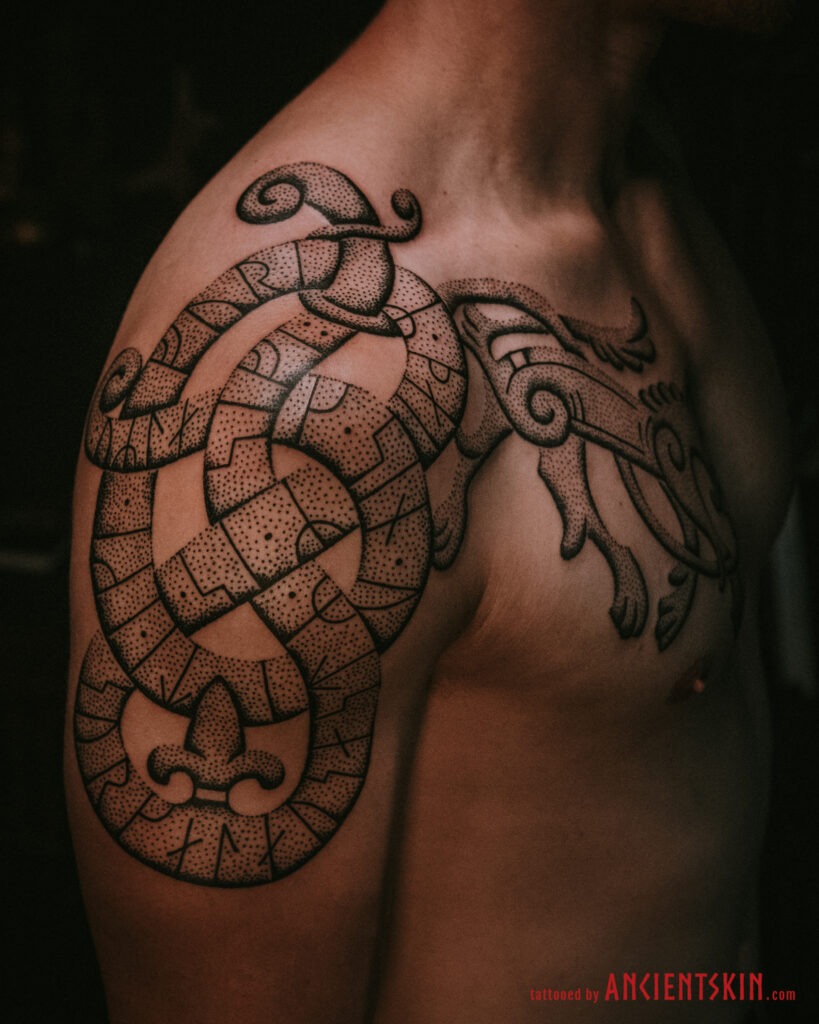
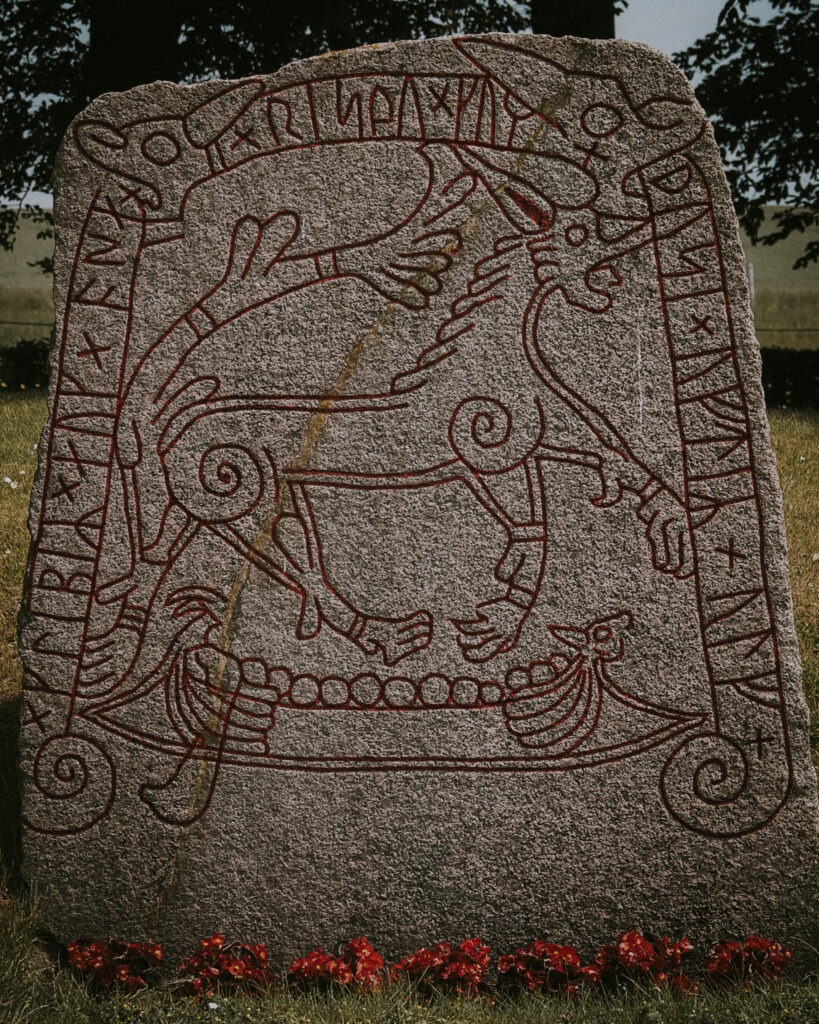
Handpoked Wolf, Runes by machine. This nordic tattoo was made for a lovely guy from france coming all the way over to sweden to connect with his roots. Half swedish, half french – so we decided to get inspired by a famous runestone, which propably depicts a wolf, maybe Fenrir. The Tullstorpstenen. The inscription on the Tullstorp Runestone consists of runic text on a serpent band that frames a central image consisting of a ship and a beast, which has been described as being a wolf. The stone is granite and 1.7 meters in height, and the inscription is classified as being carved in runestone style Pr1, which is also known as Ringerike style.
The Tullstorp Runestone is a Viking Age memorial runestone, listed as DR 271 in the Rundata catalog, that is located in Tullstorp, which is about twenty kilometers east of Trelleborg, Skåne County, Sweden, and in the historic province of Scania.
🇸🇪 Tullstorpstenen, med signum DR 271, är en runsten som står på Tullstorps kyrkogård i Tullstorps socken och Trelleborgs kommun i Skåne. Dess ursprungliga plats är okänd.
Picture of the runestone: Sven Rosborn Creative Commons Attribution-ShareAlike 3.0 Unported – Thank you!
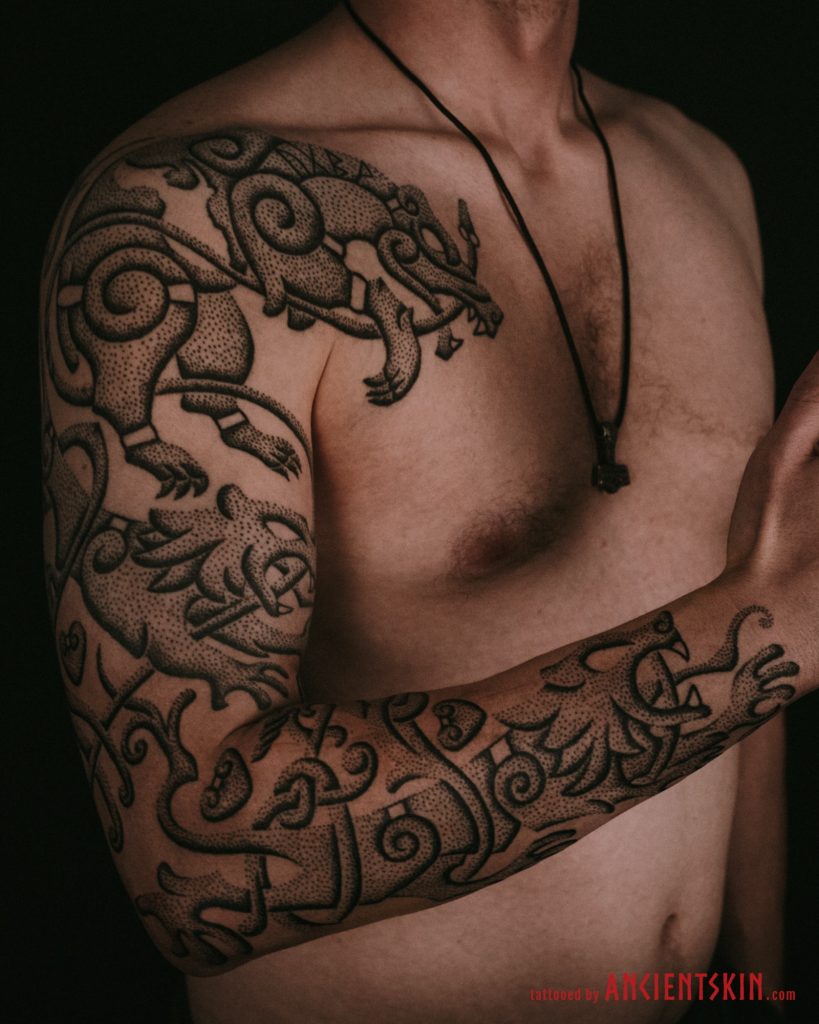
Nordic tattoo in Sweden – Jormungandr and a Seal – A sleeve dedicated to Rán, the goddess of the sea. … more
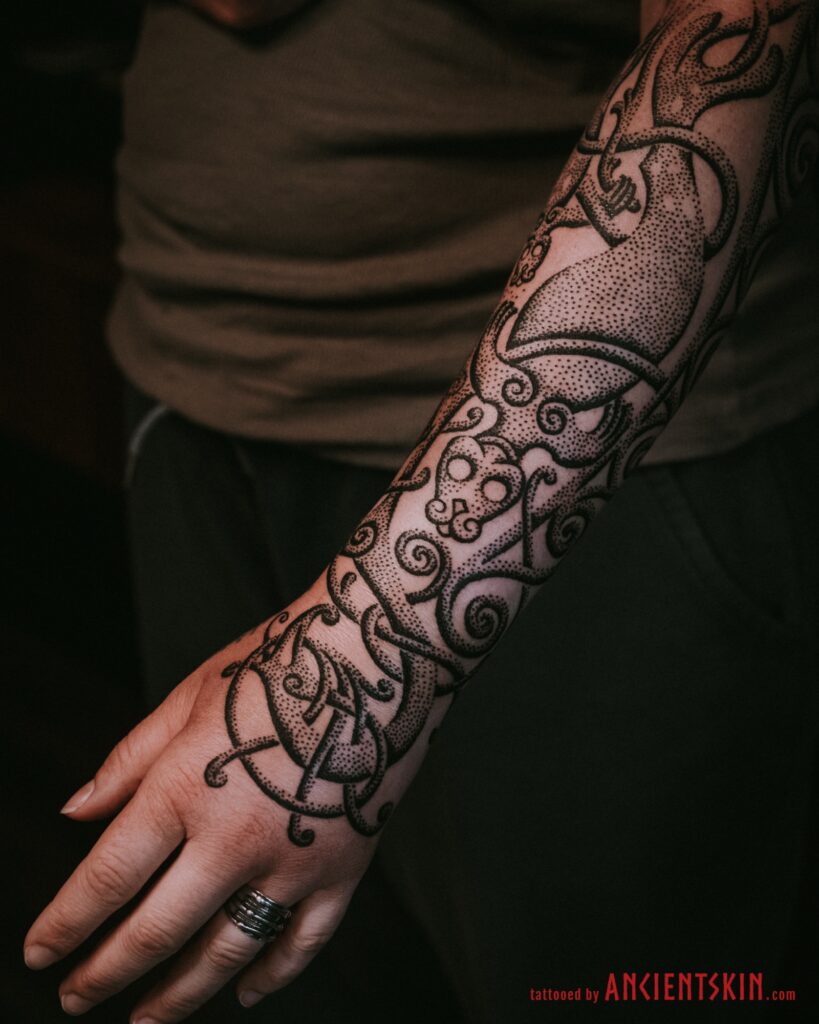
Nordic tattoo in Sweden – Jormungandr and a Seal – A sleeve dedicated to Rán, the goddess of the sea. In Norse mythology, Rán is a goddess and personification of the sea. Rán and her husband Ægir, a jötunn who also personifies the sea, produced together nine daughters who personify the sea waves. Rán also has a son Snær who personifies the snow. Rán may also be the mother of the beautiful jötunn Gerðr, wife of the god Freyr. The goddess is frequently associated with a net, which she uses to capture sea-goers. According to the prose introduction to a poem in the Poetic Edda and in Völsunga saga, Rán once loaned her net to the god Loki.
Jelling Style (900—975) Wolf with Mushrooms. The Viking art style Jellinge is a phase of Scandinavian animal art that took … more
Jelling Style (900—975) Wolf with Mushrooms. The Viking art style Jellinge is a phase of Scandinavian animal art that took place during the late 10th century. Bridging the earlier Borre style with the later Mammen style, it is characterized by ribbon-like stylized animal motifs and band-shaped bodies of animals. It was originally applied to a variety of objects in Jelling, Denmark, such as Gorm’s Cup by King Gorm and Harald Bluetooth’s great runestone, but more recently the style is included in the Mammen style.
Nordic tattoos inspired by the past, nature, mushrooms, folk art, symbolism, runestones and nordic mythology. I am based in Sweden, Västra Götaland. Visit us in Sweden!
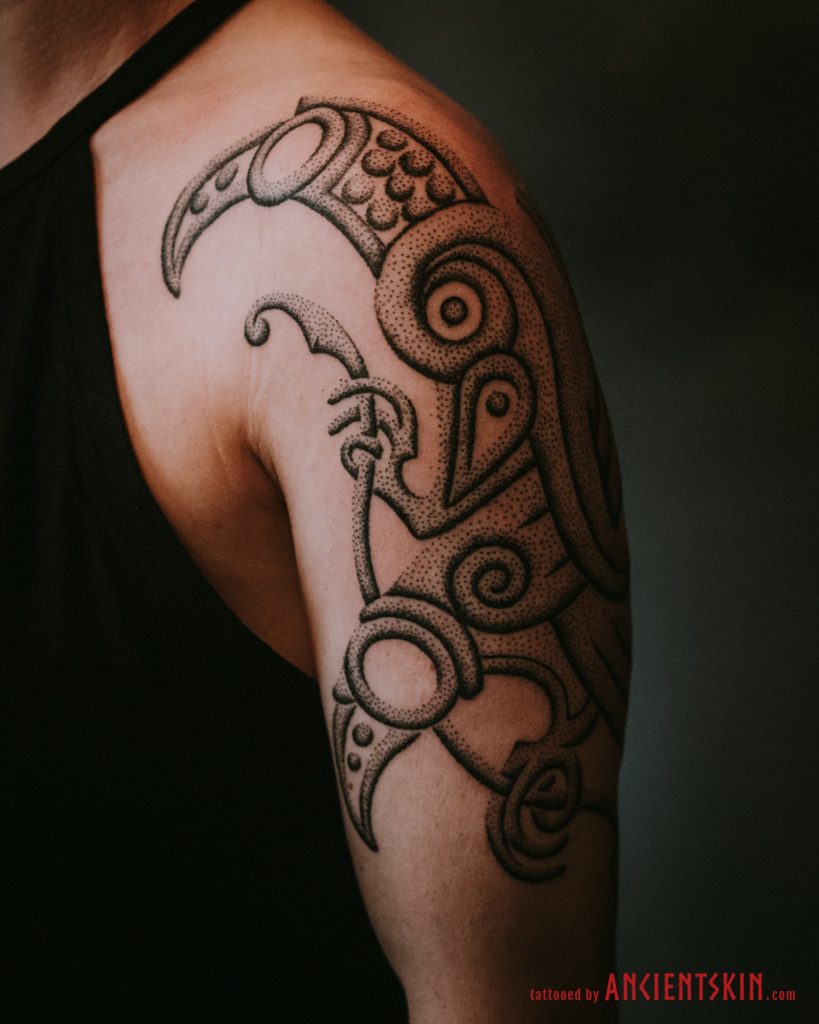
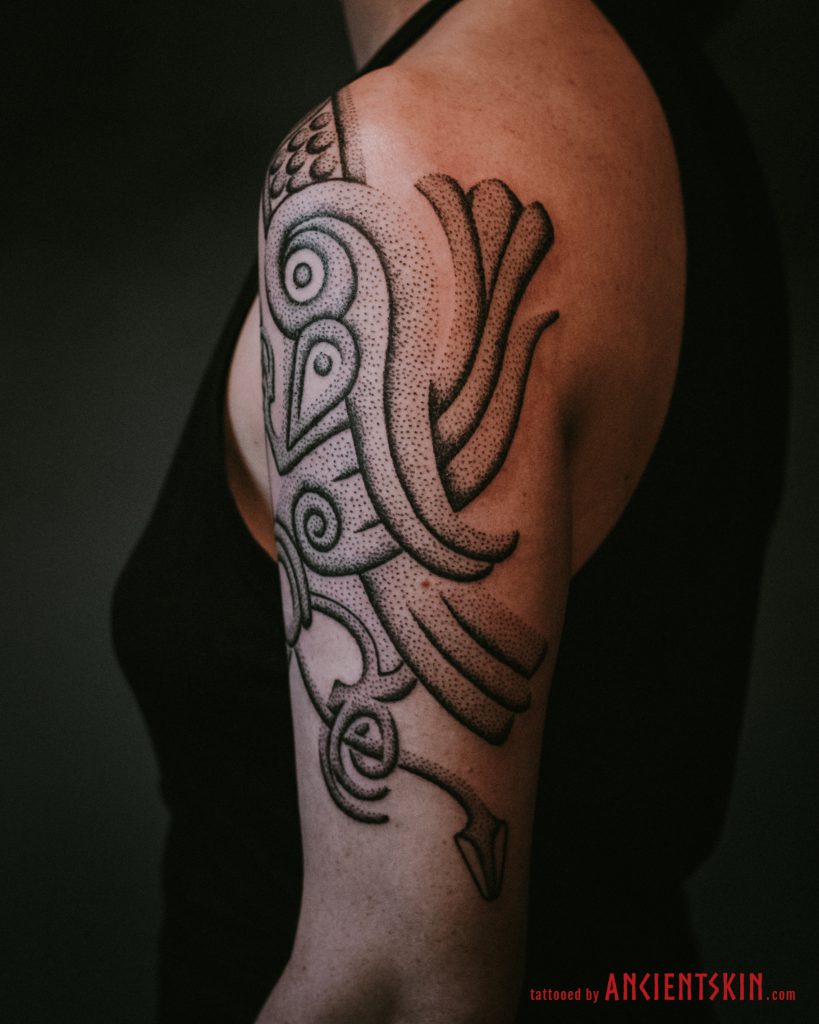
Handpoked Ravens | In Norse mythology, Huginn and Muninn roughly „mind and will“ are a pair of ravens that serve … more
Handpoked Ravens | In Norse mythology, Huginn and Muninn roughly „mind and will“ are a pair of ravens that serve under the god Odin, flying around the world, or better Midgard, and bringing him information and gossip. Huginn and Muninn are attested in the Poetic Edda, compiled in the 13th century from earlier traditional sources: the Prose Edda and Heimskringla. In the Third Grammatical Treatise, compiled in the 13th century by Óláfr Þórðarson and in the poetry of skalds.
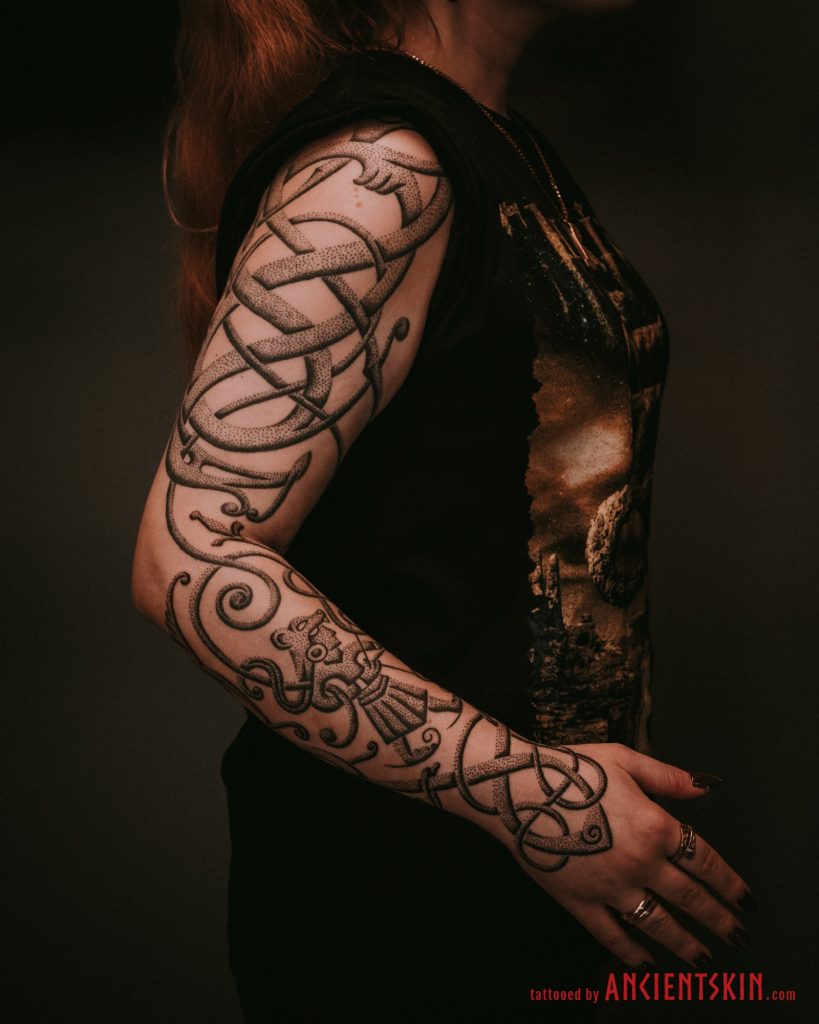
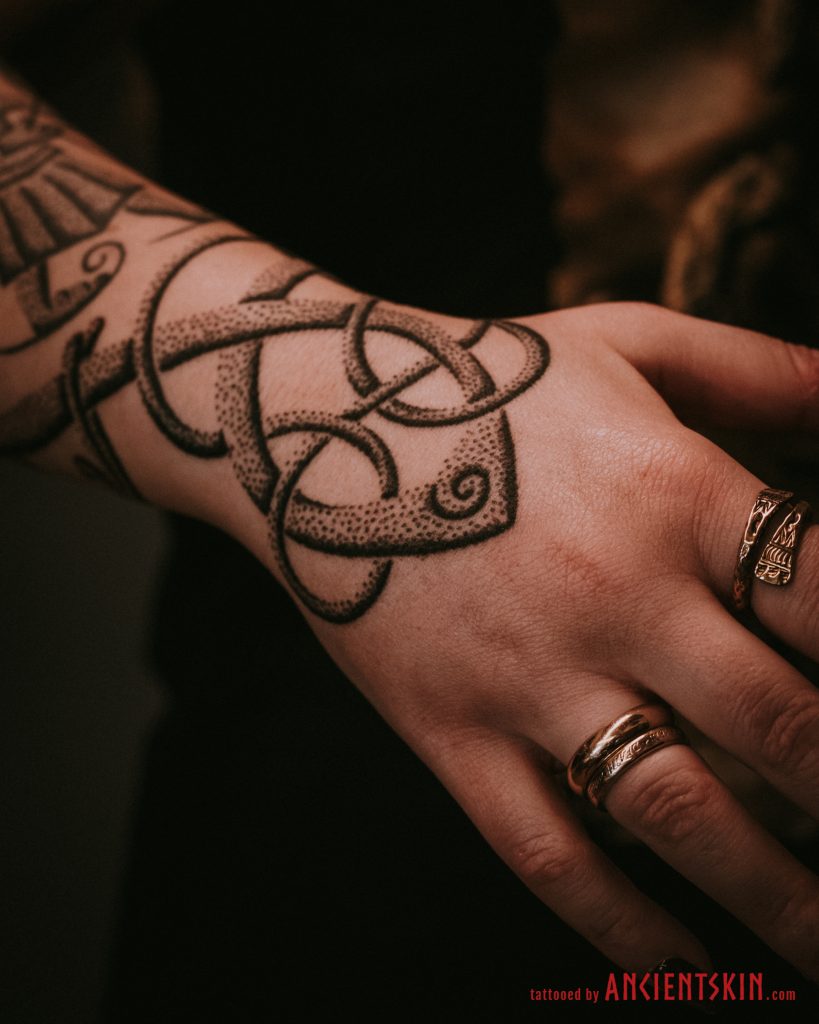
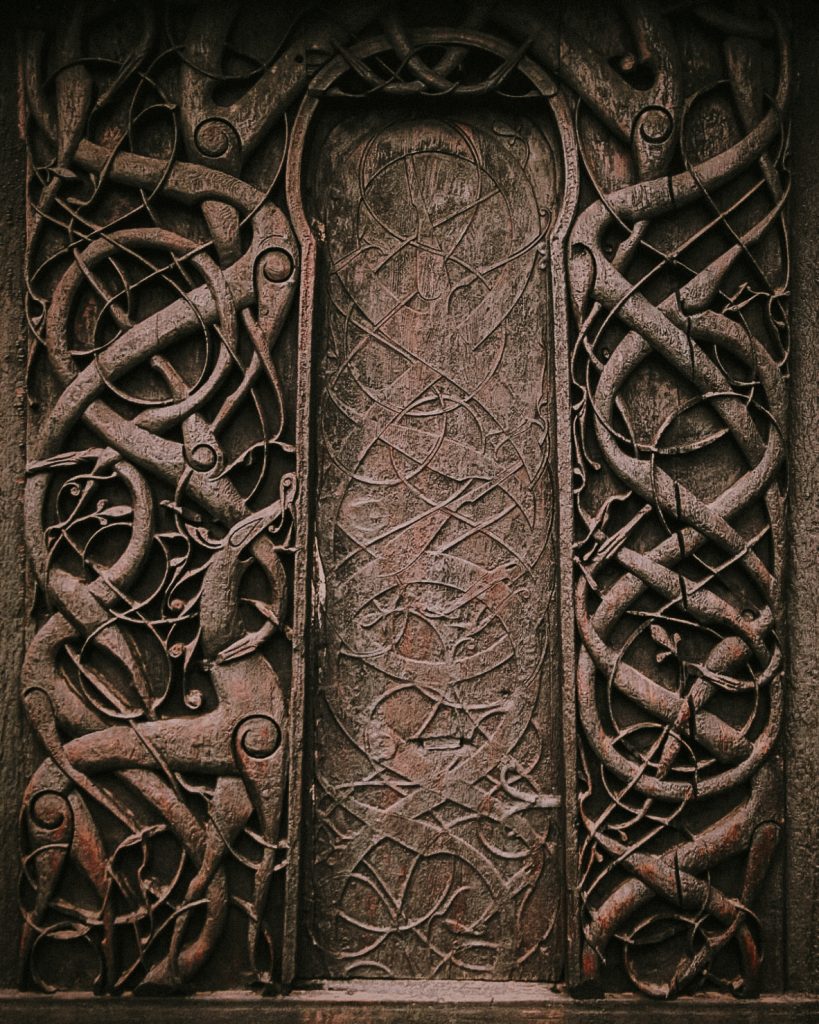
This is the girl with the Dragon Tattoo in Urnes Style inspired Nordic Tattoo with the godess Skadi as a … more
This is the girl with the Dragon Tattoo in Urnes Style inspired Nordic Tattoo with the godess Skadi as a symbol. All handpoked and freehand drawn on the skin. The Urnes style is an art style from the late Viking age, used around c. 1050–1125 AD.
The name of the style comes from the ornamentation on the portal of the Urnes stave church you see below in Vestland County, Norway, and was coined by the Norwegian archaeologist Haakon Shetelig (1877–1955) in 1909.
The Urnes style is the last phase of Viking art. The style is a refinement of the Ringerike style and depends upon interplay of gracefully curving lines for its effect.
The animals are still curvaceous and one or more snakes are included with the quadrupeds. The spiral hip is still used, but it is not as large as in the Mammen and Ringerike styles. The animals have large almond-shaped eyes and often bite one another.
The Urnes style was also often used on runic stones, when the runic inscription was carried within the body of the animal. A good example from Lingsberg, Uppland, Sweden, has a Christian cross and two Urnes style animals which carry the runic inscription.
A handpoked tattoo sleeve done in several sessions.
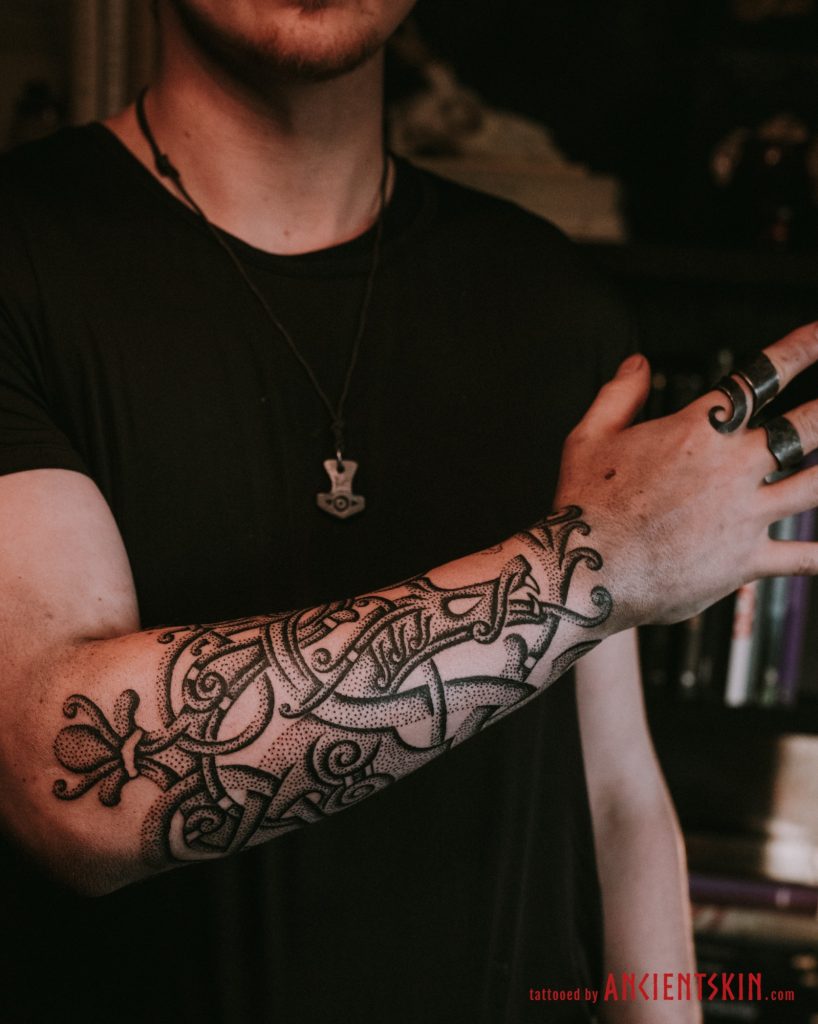
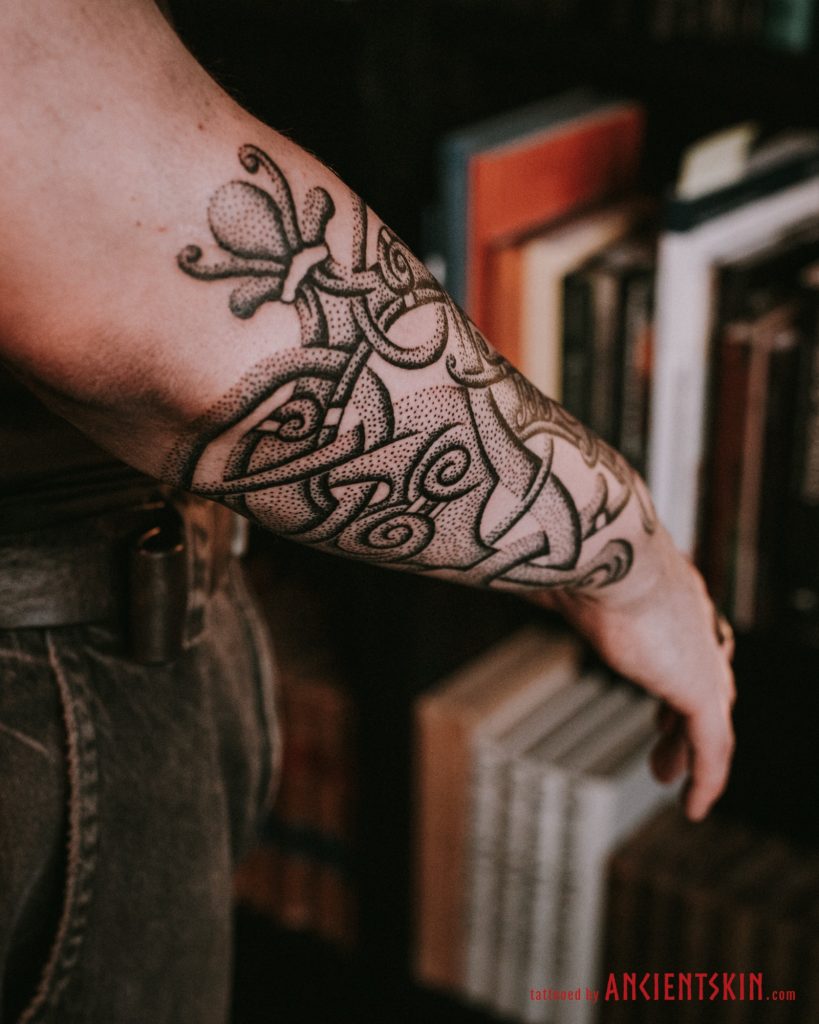
This tattoo was inspired by the Ringerike Style wind velvet in gold-plated bronze you see on the last slide. This … more
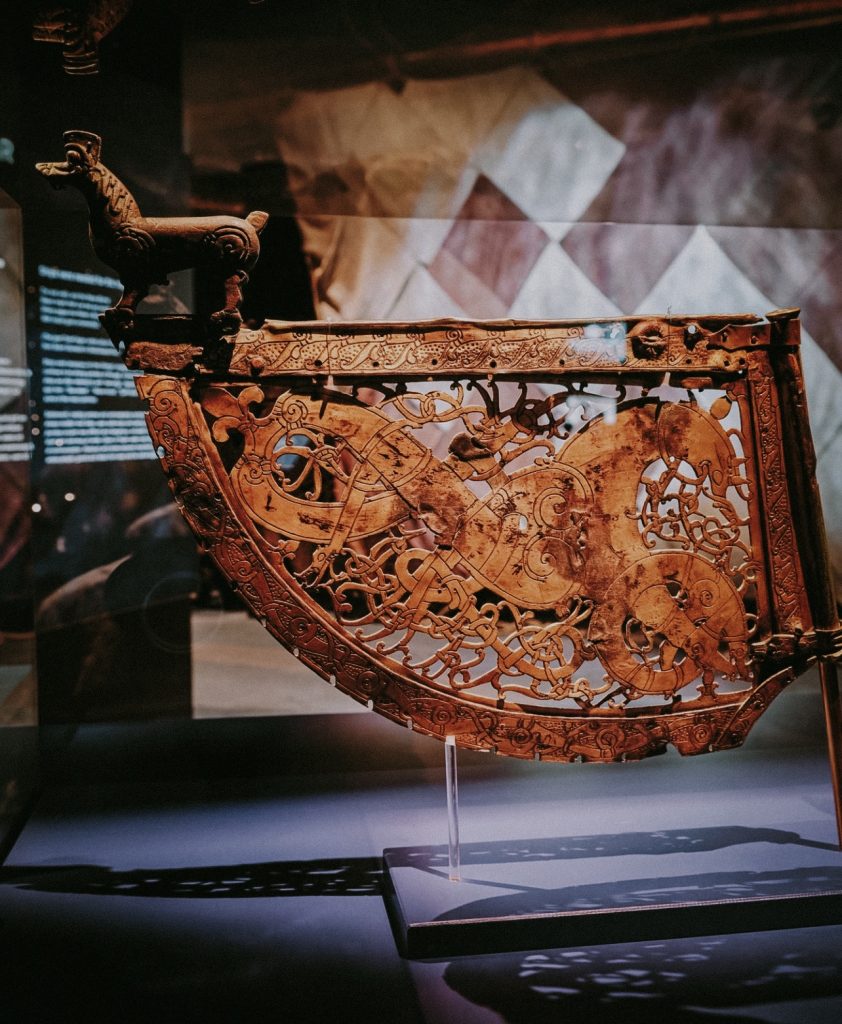
This tattoo was inspired by the Ringerike Style wind velvet in gold-plated bronze you see on the last slide. This find from the Viking Age 750 – 1100 AD is exhibited @historiska in Stockholm.
The Söderala vane (Swedish: Söderalaflöjeln) is a weather vane dating from the Viking Age, richly ornamented and made of gilt bronze. It derives its name from Söderala Church in Söderala, Sweden, where it was used as a weather vane during the 18th century. It was most probably originally used as a vane on a Viking ship, and shows signs of wear. On stylistic grounds, it has been dated to c. 1050. It is today part of the collections of the Swedish History Museum. A copy of the vane is in Söderala.
The Söderala vane consists of a triangular plate, made of gilt bronze and reinforced by smaller bronze plates and rivets in some places. A small sculpture of an animal, kept separately from the vane when it was bought by the museum, was originally attached to the top end of the bronze plate. The curved edge of the plate is pierced by several small holes, in which some kind of loosely hanging decorations may once have been attached. The plate itself is decorated with depictions of three beasts, interlaced with each other and with other purely decorative elements such as spirals, in a style closely related to that of Swedish burial monuments from the middle of the 11th century. The main decorative element is a depiction of a Norse dragon with wings, its forelegs and neck stretched somewhat like a horse about to rise. Its back is comparatively small. The dragon is very similar to a dragon depicted on a tombstone from the mid-11th century from Sundby Church in Södermanland, Sweden. Another creature lies coiled around the forelegs of the dragon, while the third, legless, is wrapped around the body of the dragon.
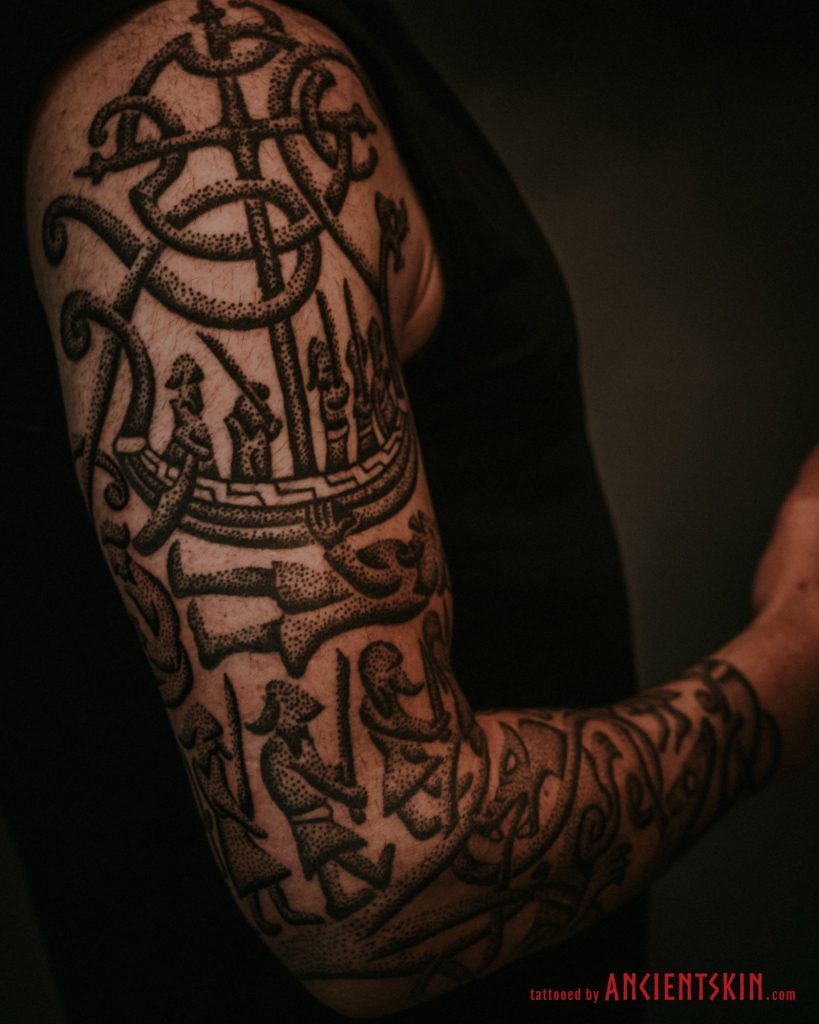
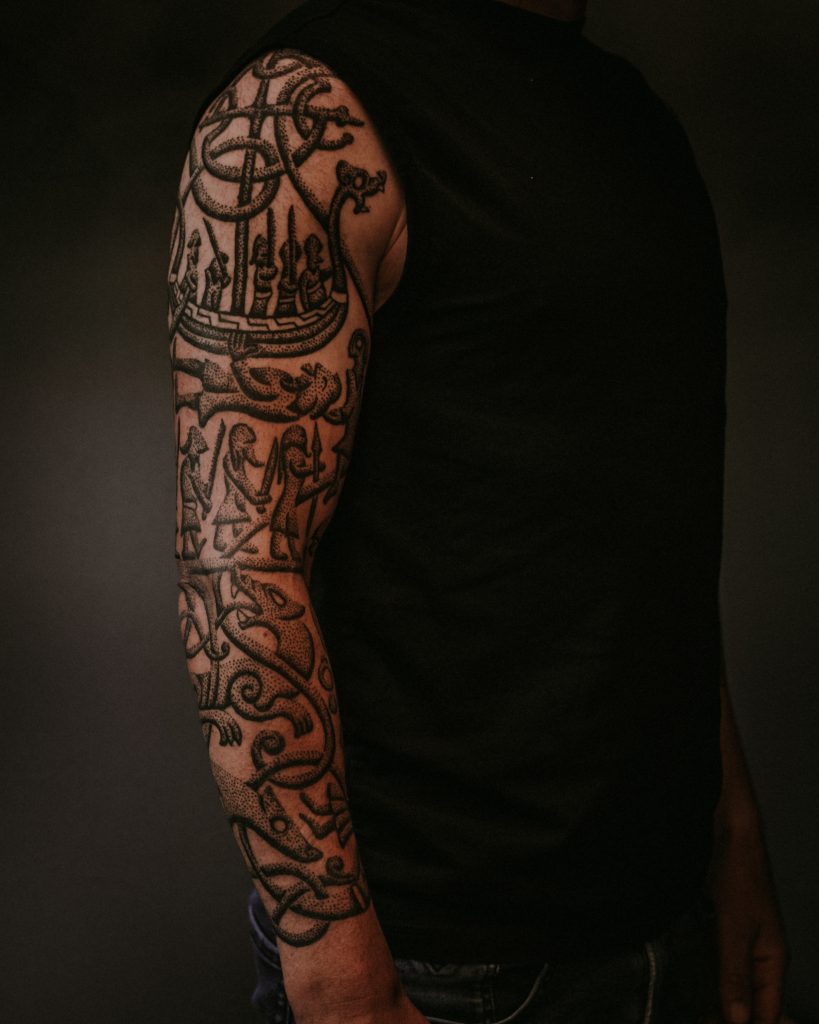
I made this Nordic Tattoo Sleeve for a wonderful person inspired by the famous Gotland Picture Stone (Hammar Stone I). … more
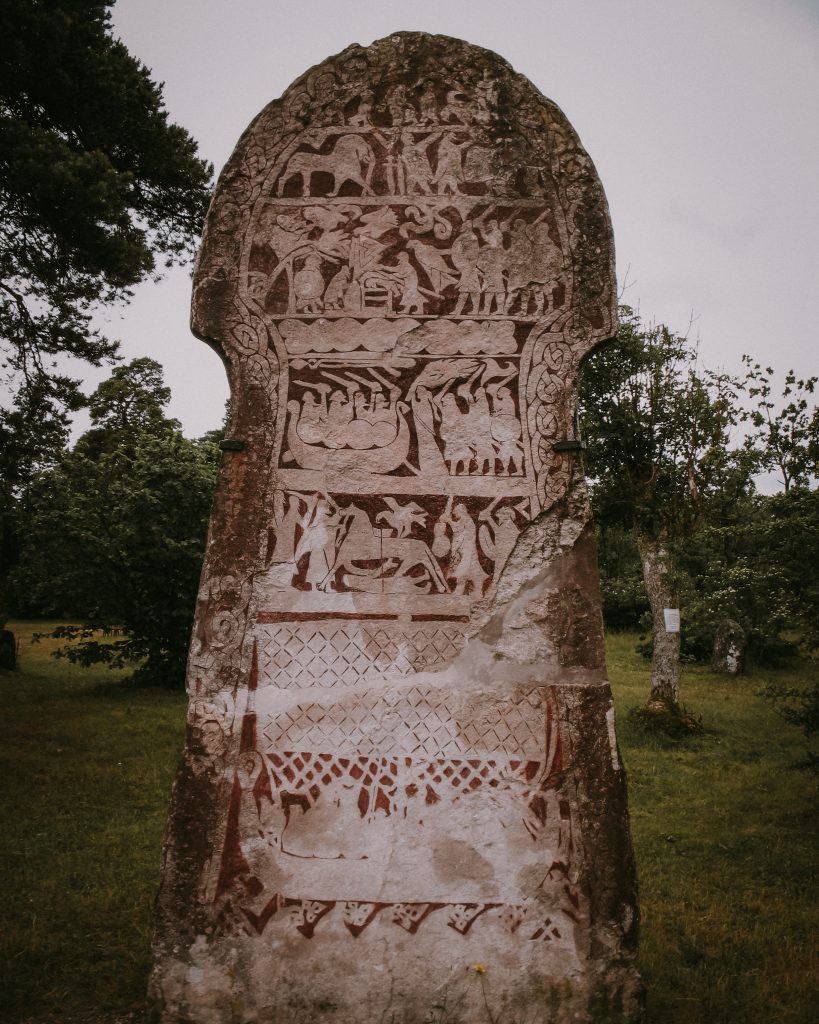
I made this Nordic Tattoo Sleeve for a wonderful person inspired by the famous Gotland Picture Stone (Hammar Stone I). It tells his life-story in the visual language of the picture stone. Family, worklife, important events. lifechanging events. Everything combined to one picture around the arm. Everything is connected like life is.
The Stora Hammars I picture stone (GP 253) on Gotland, Sweden, is a limestone monument measuring approximately 391 cm in height and 162 cm in width. Dating to around 700–1000 AD (Lindqvist Type C/D), it is characterized as a tall, slender stone featuring six panels of detailed, mythological carvings. Stora Hammars, Lärbro parish, Gotland. You will find the stone on Gotland (@bungemuseet) Bunge Museet.
I love to do these storytelling tattoos. I like to freehand and help you to tell and visualize your story on your skin. I work in Sweden, Västra Götaland @vik__ink studio and also in Germany @ancientskin.tattoo.studio — Handpoke or Machine Tattoos.
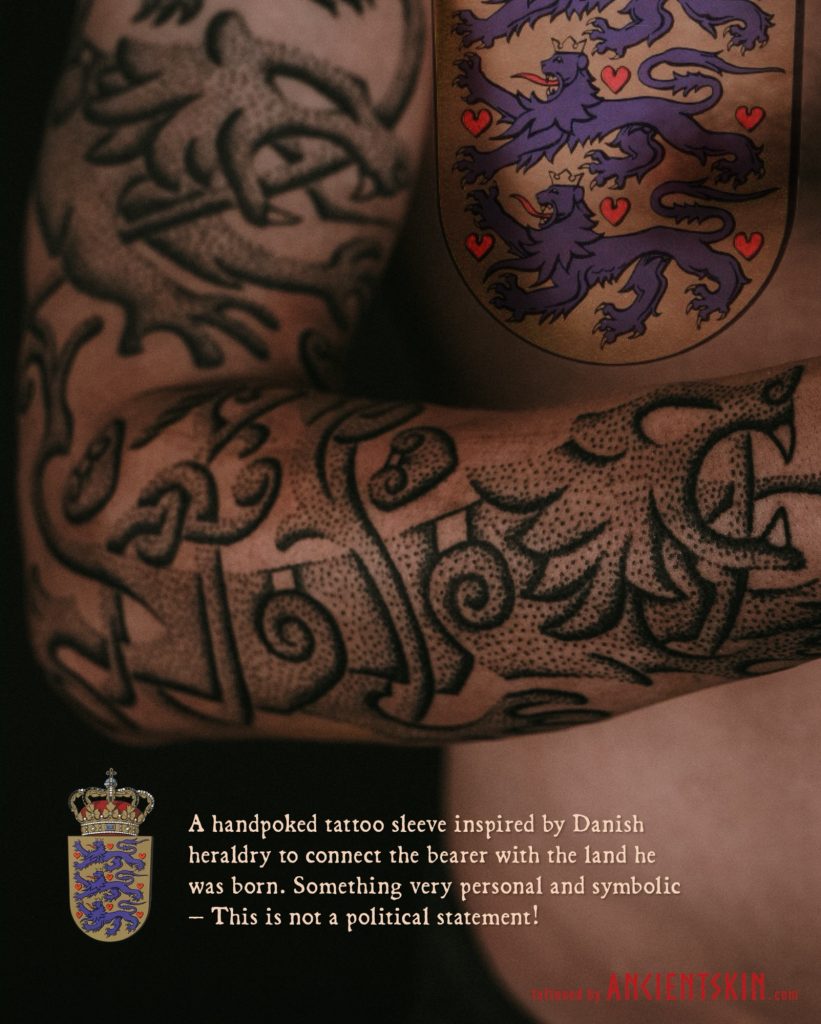
A handpoked sleeve (work in progress) inspired by the heraldry of Denmark. The idea is to put all three lions … more
A handpoked sleeve (work in progress) inspired by the heraldry of Denmark. The idea is to put all three lions and the hearts into the sleeve. On the top there is a spirit animal, the bear (also a link to the heraldry, where Greenland is represented with the polar-bear). And again: This is not a political statement, this is something for the soul! 🙏🏻
The state coat of arms of Denmark (rigsvåben) consists of three pale blue lions passant wearing crowns, accompanied by nine red lilypads (normally represented as heraldic hearts), all in a golden shield with the royal crown on top.
The national coat of arms of Denmark (nationalvåben, also called lille våben) is similar to the state coat of arms, but without the royal crown above the shield.
All Handpoked over several sessions in Germany and Sweden. There is still some work that needs to be done. Looking forward to the next time. Nordic Tattoo in Västra Götaland, Sweden.
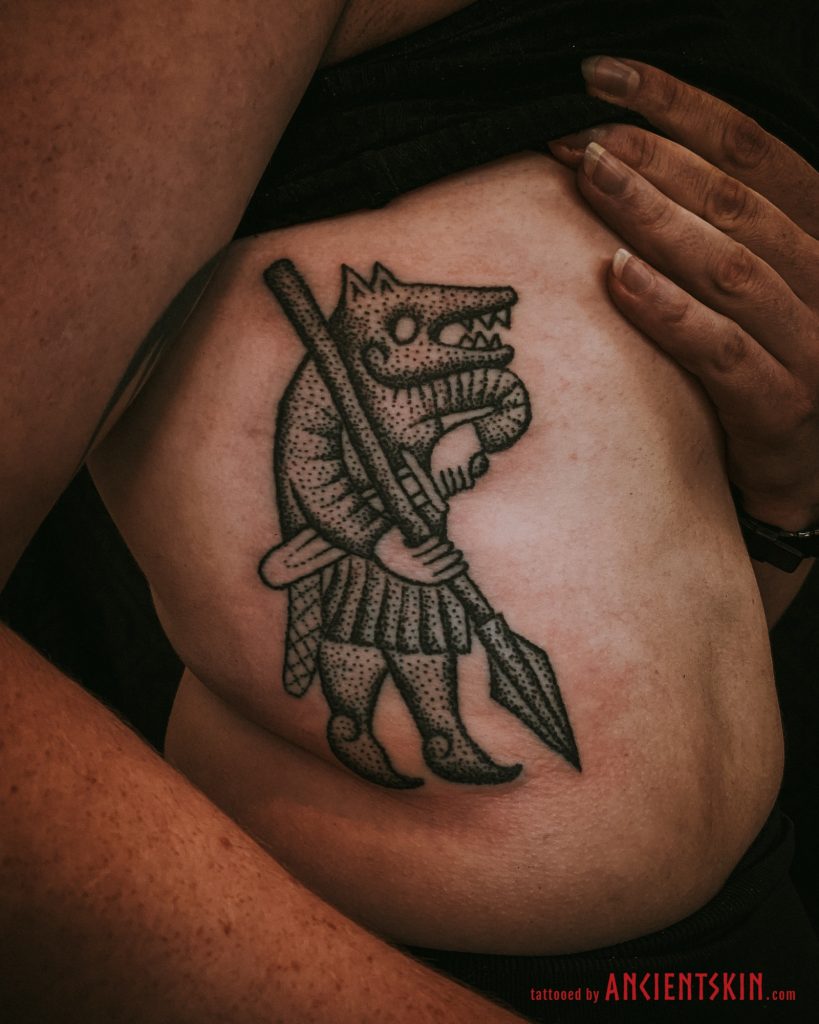
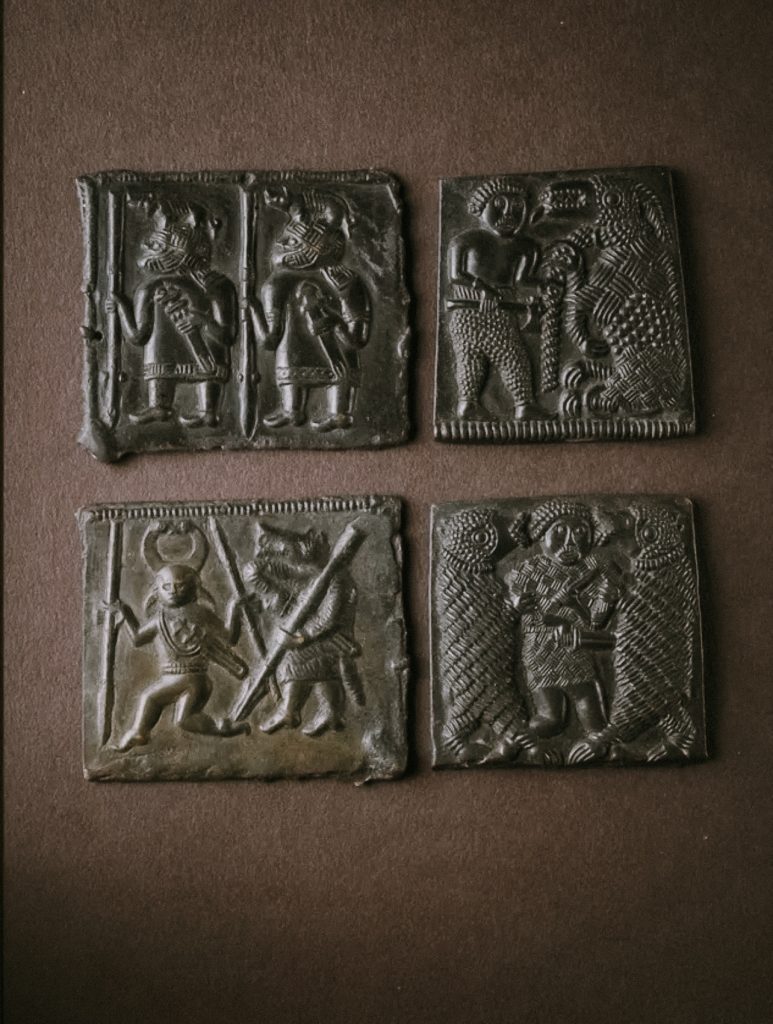
Handpoked wolfman warrior tattoo – The Torslunda helmet plates are four cast bronze dies found in Torslunda parish on Öland, … more
Handpoked wolfman warrior tattoo – The Torslunda helmet plates are four cast bronze dies found in Torslunda parish on Öland, Sweden, displaying figures in relief depicting scenes from Germanic mythology. Discovered in 1870, they are now housed @historiska i Stockholm and are famous for their complete mythological scenes. Dating back to the Vendel Period (550-800), each plate features different mythological designs, including depictions of warriors and figures reminiscent of Norse gods like Odin. Plate number 2 notably shows a figure with a missing right eye, suggesting Odin, who sacrificed an eye for wisdom. This figure is accompanied by a wolfman, interpreted as a berserker, symbolizing the frenzy of battle. They were likely used for mass production by placing foil against the scenes and applying pressure from the back.
The „2026“ Lunar Year of the Fire Horse, which begins today is a year of swift, transformation and active movement. … more
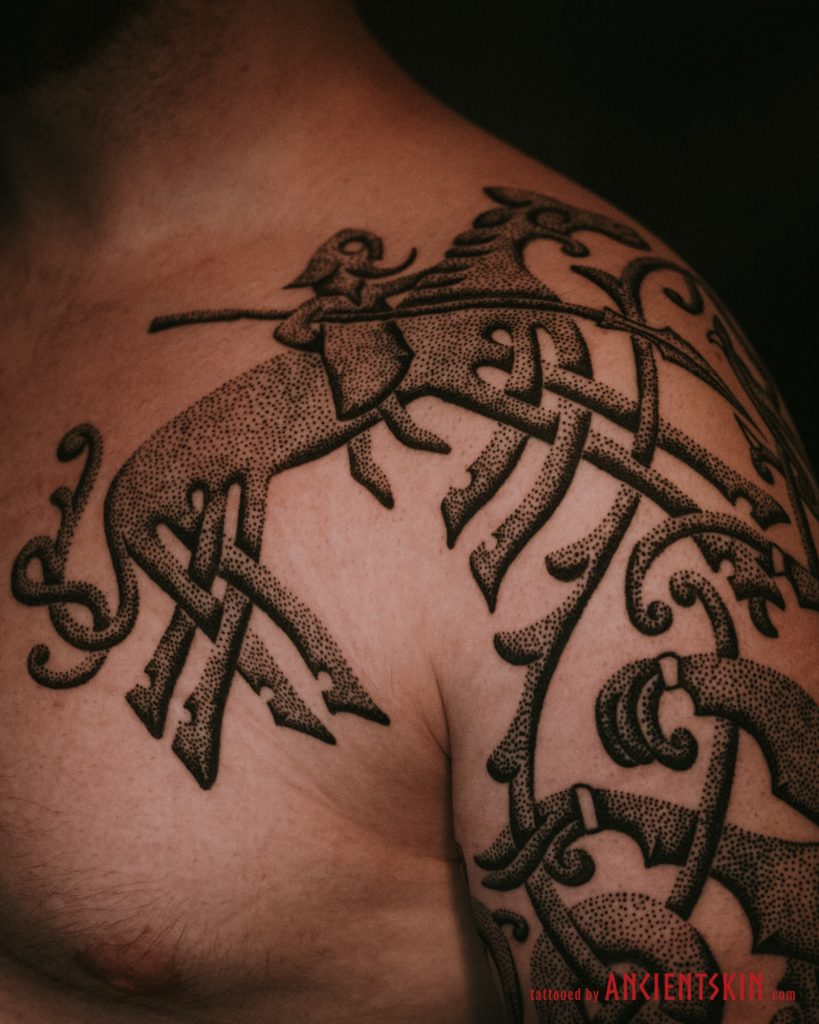
The „2026“ Lunar Year of the Fire Horse, which begins today is a year of swift, transformation and active movement. A very powerful sign and symbol. Its the perfect time to start something new, to left behind whats not serving anymore. It brings me directly to the connection of Raido. The Raido rune (ᚱ) is strongly associated with the horse, representing the journey of life, movement, and the „ride“ of the horse itself. Raido is known as the rune of the journey, representing both physical travel and spiritual, internal, or emotional evolution. It implies taking initiative, gaining control of one’s life, and finding the right path.
This tattoo shows Sleipnir, the eight-legged horse of Odin. It is inspired by the Tjängvide image stone. This is a Viking Age artifact from Gotland, Sweden, significant for its detailed mythological carvings. Discovery and Location: The stone was discovered in 1844 on a farm in Tjängvide, Gotland, and is now housed at the Swedish Museum of National Antiquities in Stockholm @historiska
Image: Anställd vid SHM, Historiska museet/SHM (CC BY 4.0)
Nordic Tattoo Sweden & Germany — Freehand drawn directly on the skin. Tattooed by hand and machine.
⚲ Schweden – 512 50 Svenljunga, Västra Götaland (50min von Airport Göteborg-Landvetter) ⚲ Deutschland – 73102 Birenbach, Baden-Württemberg (Zwischen Ulm und Stuttgart)
Nordic Tattoo Studio in Schweden: Nordiska Tatueringar Sverige – Das Studio befindet sich in Svenljunga, Västra Götaland ungefähr eine Stunde östlich von Göteborg. Svenljunga ist gut erreichbar mit Auto (ca. 1 Std. von Göteborg, 30 Min. von Borås), Zug (Kust till kust-bana) und Bus, mit Flugzeug über die Flughäfen Göteborg und Jönköping (je ca. 1 Std. entfernt) und liegt nahe wichtiger Straßen wie der 40, 27 und 154. Das UNESCO-Weltkulturerbe Tanum liegt etwa 2,5 Std. nördlich – Die Felsritzungen von Tanum liegen auf dem Gebiet der schwedischen Gemeinde Tanum in der historischen Provinz Bohuslän. Sie sind etwa 3000 Jahre alt und gehören zur Bronzezeit. Durch den großen Reichtum unterschiedlicher Motive. Bisher wurden über 10.000 Felsritzungen entdeckt.
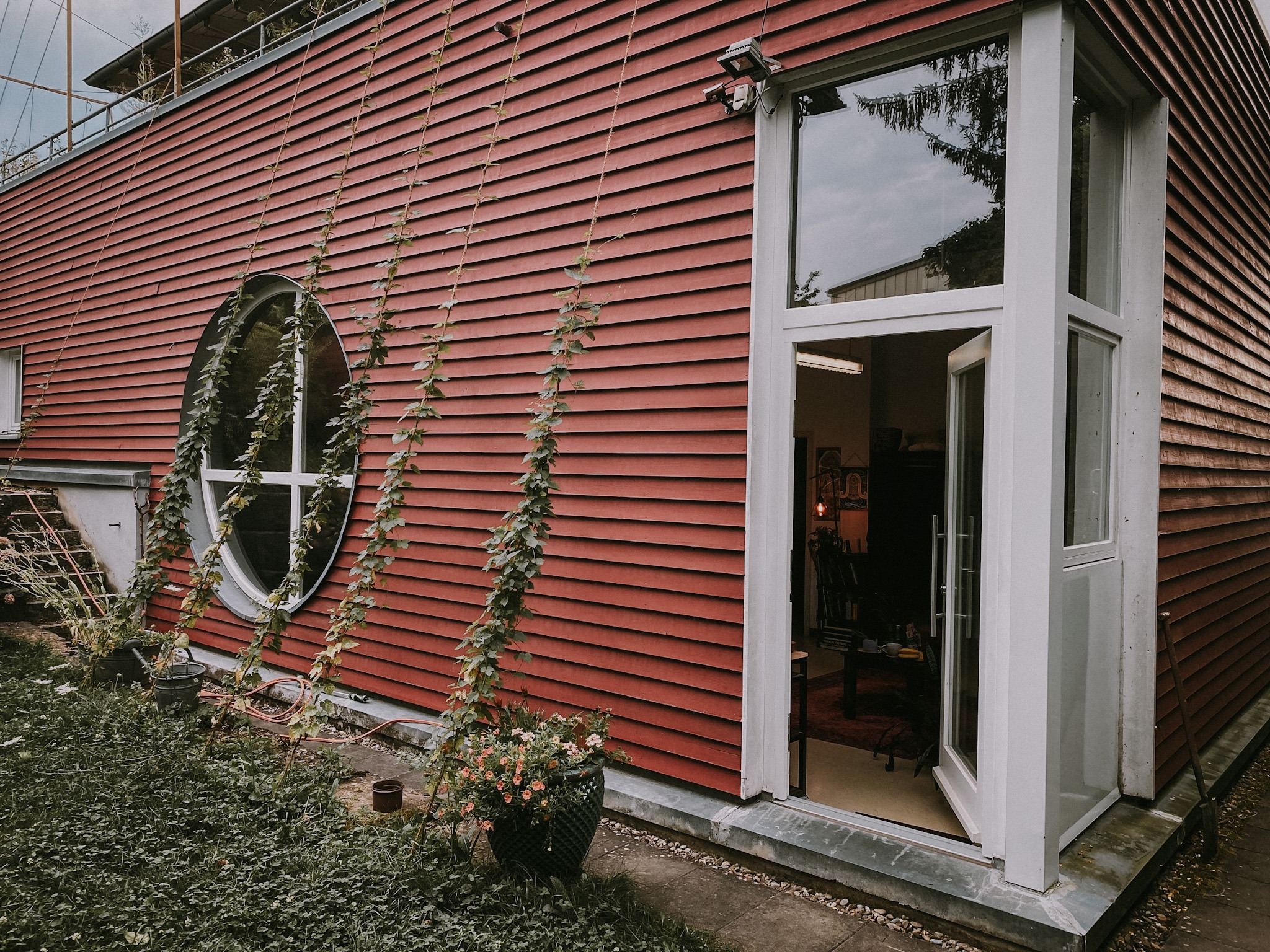
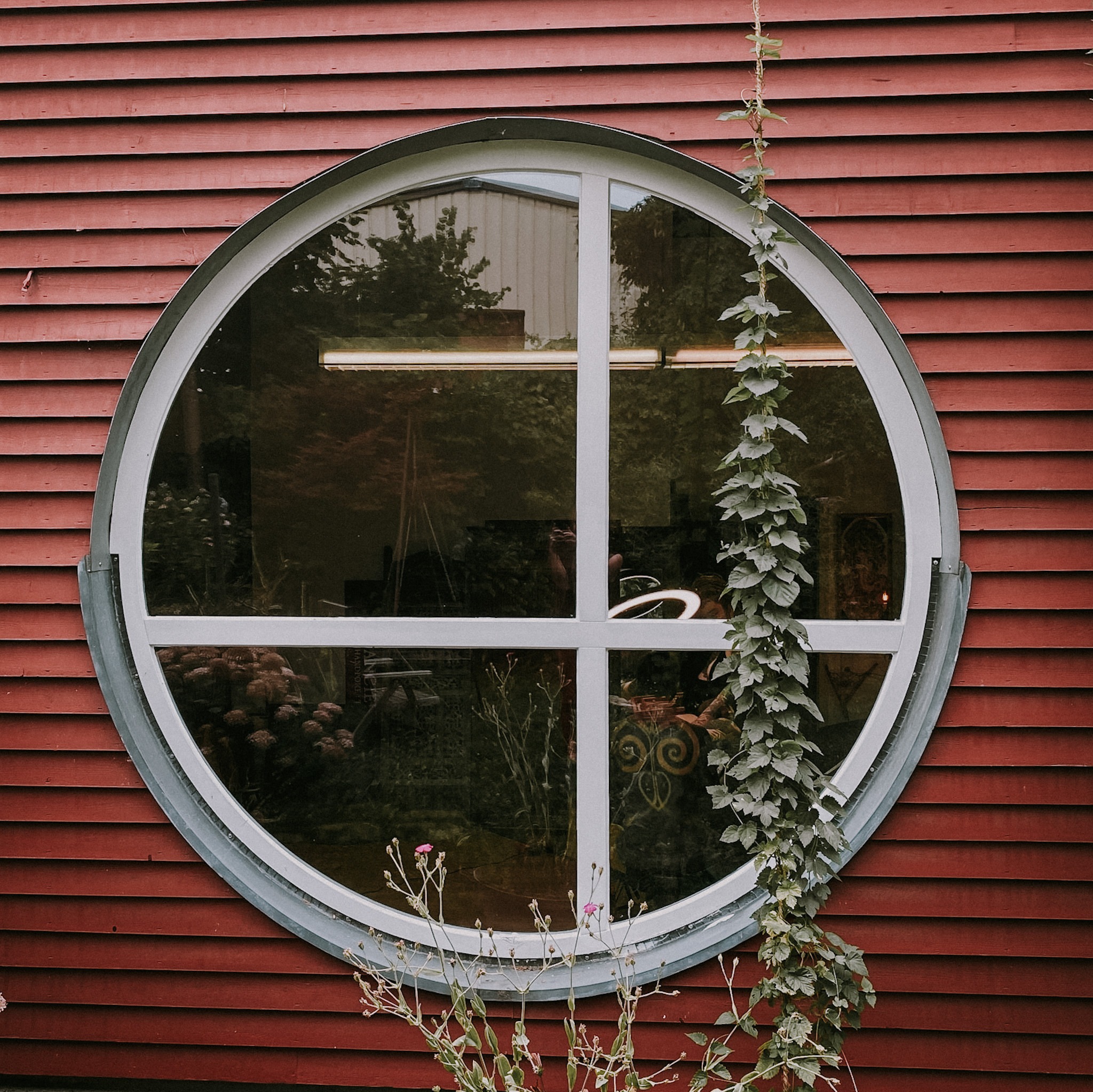
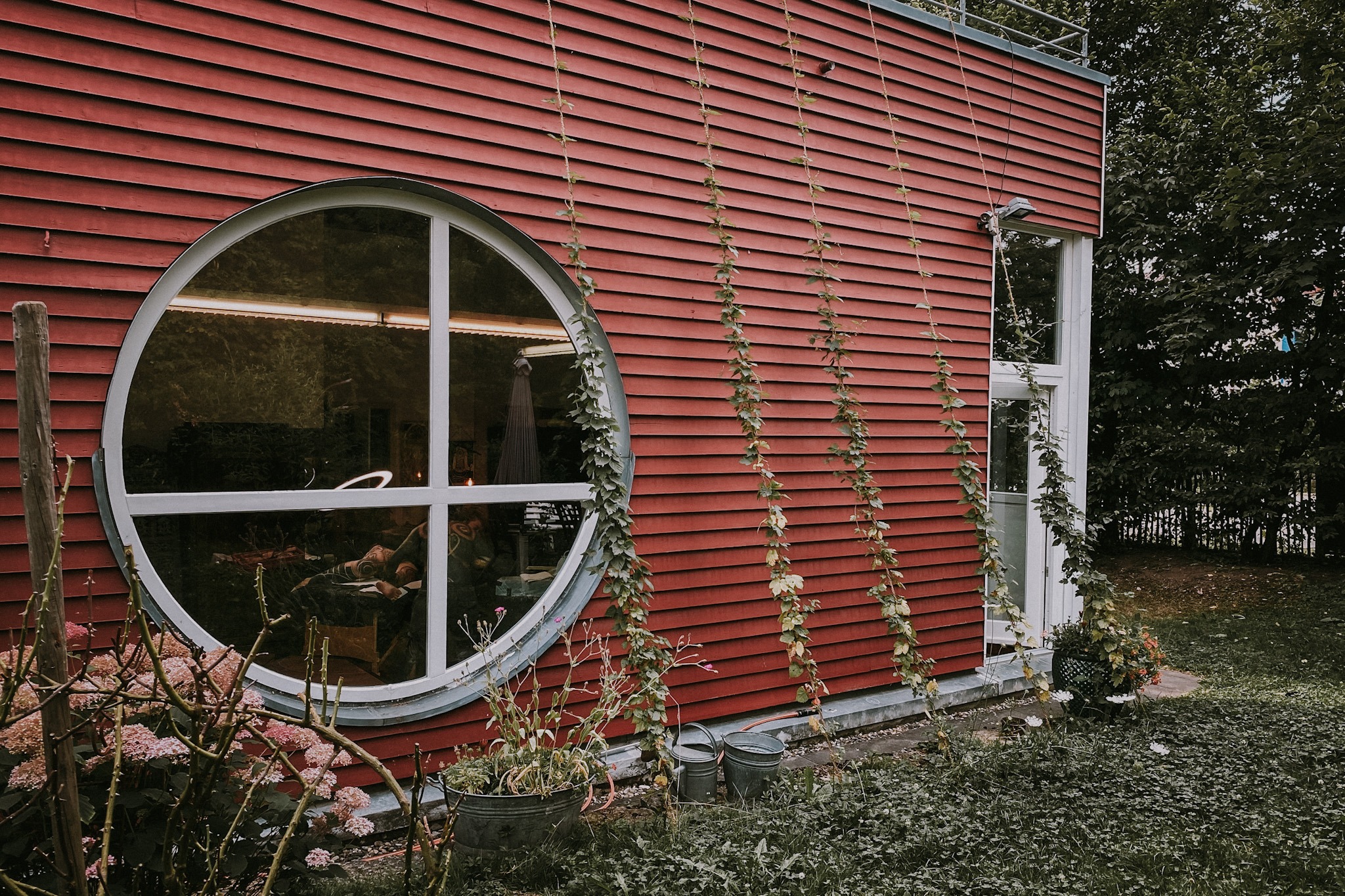
Nordic Tattoo Studio in Deutschland: Das Ancientskin Tattoo Studio befindet sich in ruhiger Lage in einem kleinen Dorf im Süden Deutschlands – in Baden-Württemberg (Bei Göppingen zwischen Ulm und Stuttgart). Direkt an das Studio grenzt der Garten mit Platz zum Entspannen und da wir keine Laufkundschaft haben und nur auf Termin arbeiten haben wir einen Platz geschaffen, der die notwendige Ruhe für ein Tattoo-Ritual bietet. Wir haben einen Ort geschaffen, der unserer Meinung nach der Traditionellen Tattoo Tradition gerecht wird. Das Studio ist gut mit dem Auto und den öffentlichen Verkehrsmitteln zu erreichen. Vor dem Studio sind ausreichend Parkplätze vorhanden. Direkt nebenan befindet sich ein Lebensmittelladen mit Bäckerei. Diverse Übernachtungsmöglichkeiten sind ebenfalls gut zu erreichen.
This tattoo pictures Baldr’s death, a further step towards Ragnarok. Baldur’s death serves as the primary catalyst and first major sign of the events leading
Did Vikings have Tattoos? There is some evidence that Vikings may have had tattoos, although there is no archaeological proof that can confirm how common
Wir verwenden Cookies. Viele sind notwendig, um die Website und ihre Funktionen zu betreiben, andere sind für statistische oder Marketingzwecke. Mit der Entscheidung "Nur funktionsfähige" Cookies akzeptieren" werden wir Ihre Privatsphäre respektieren und keine Cookies setzen, die nicht für den Betrieb der Seite notwendig sind. Die Cookie Einstellungen können jederzeit über den Link im Footer der Website angepasst werden.
Funktional
Immer aktiv
The technical storage or access is strictly necessary for the legitimate purpose of enabling the use of a specific service explicitly requested by the subscriber or user, or for the sole purpose of carrying out the transmission of a communication over an electronic communications network.
Vorlieben
The technical storage or access is necessary for the legitimate purpose of storing preferences that are not requested by the subscriber or user.
Statistiken
The technical storage or access that is used exclusively for statistical purposes.The technical storage or access that is used exclusively for anonymous statistical purposes. Without a subpoena, voluntary compliance on the part of your Internet Service Provider, or additional records from a third party, information stored or retrieved for this purpose alone cannot usually be used to identify you.
Marketing
The technical storage or access is required to create user profiles to send advertising, or to track the user on a website or across several websites for similar marketing purposes.