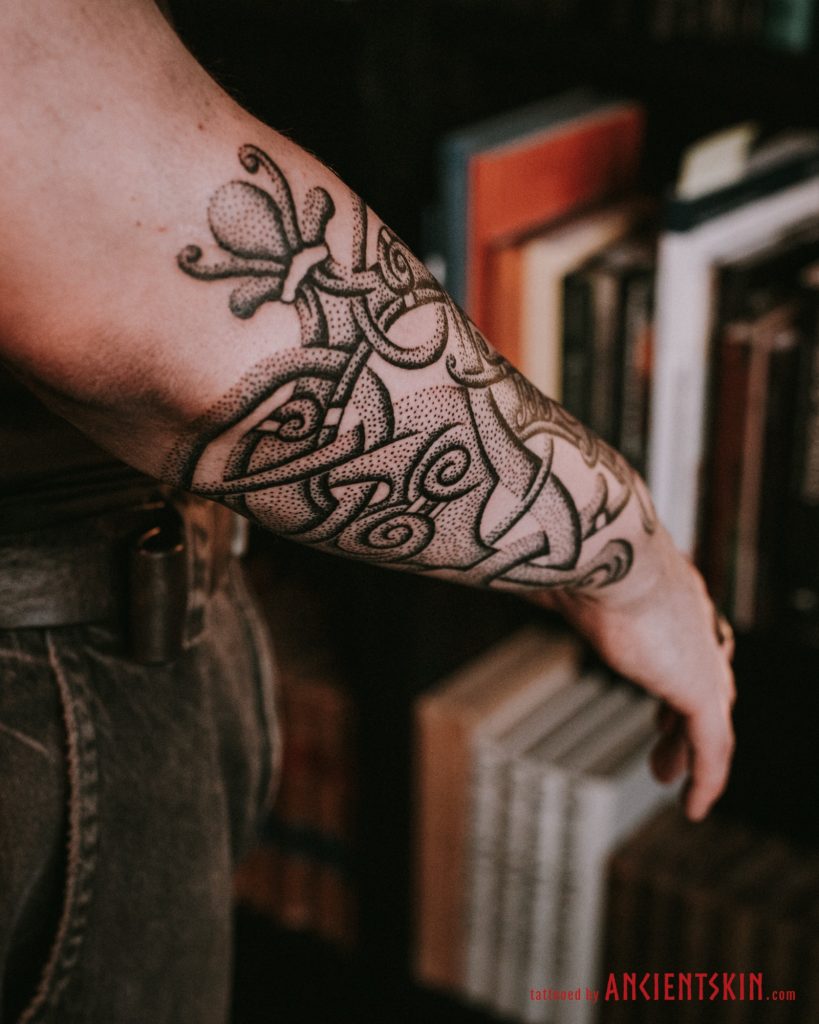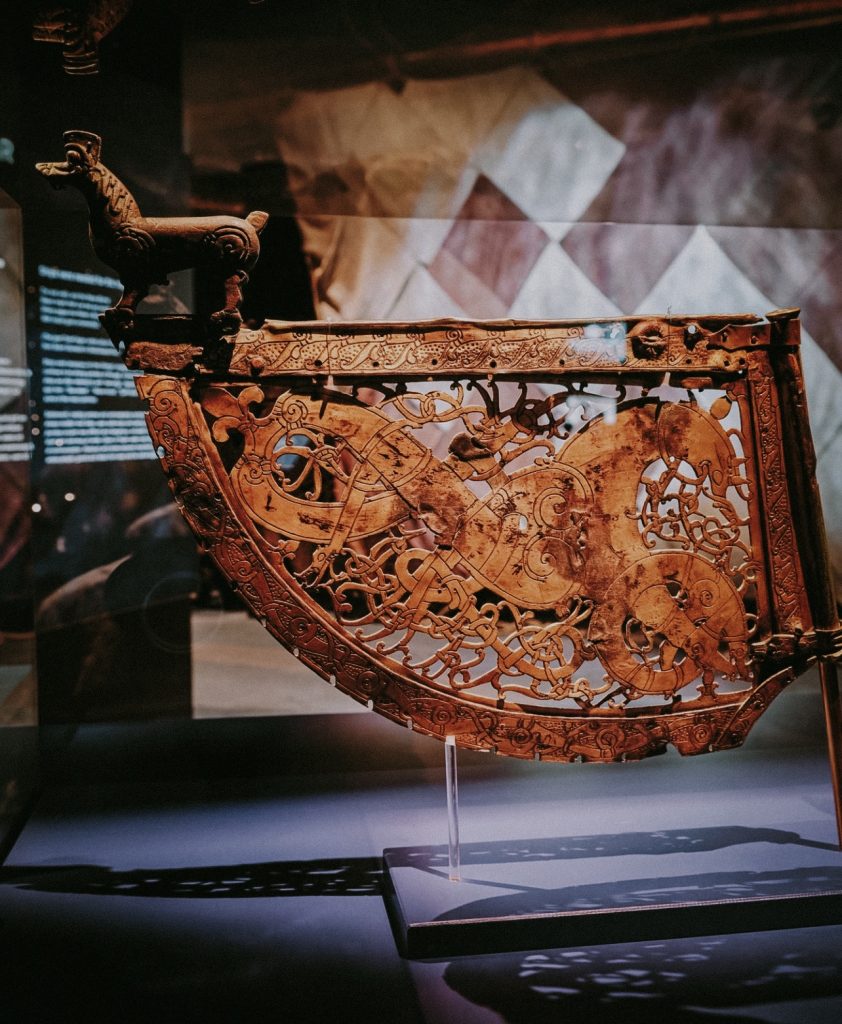

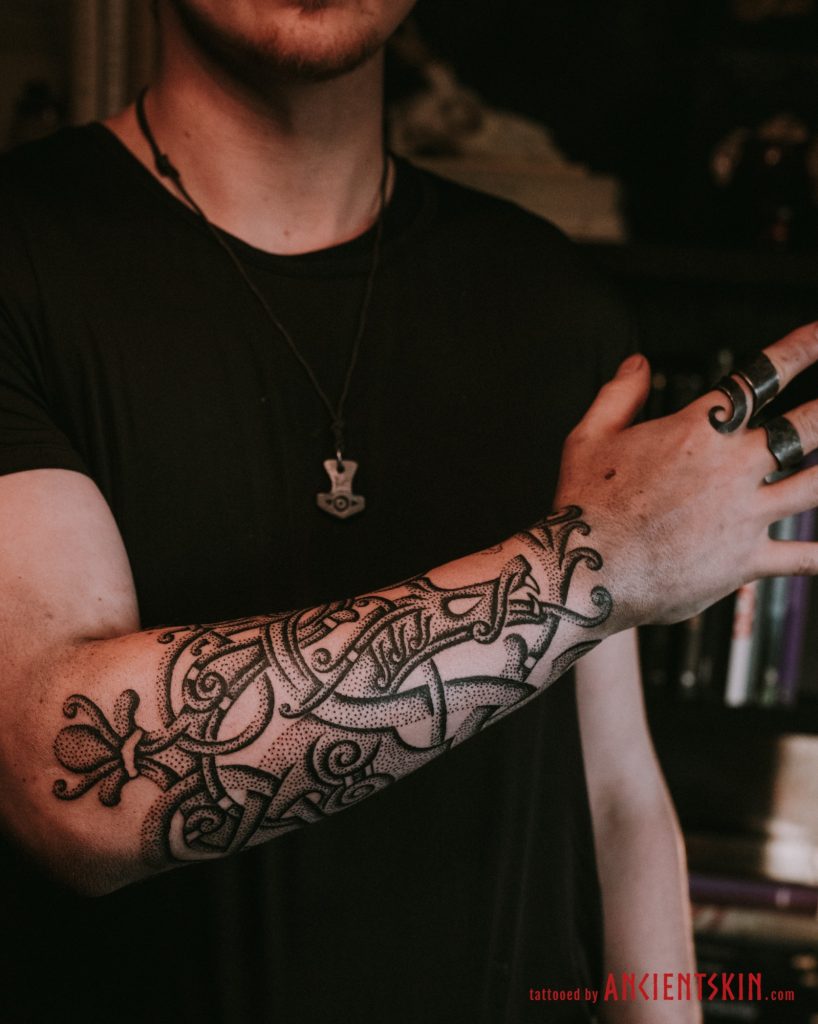
This tattoo was inspired by the Ringerike Style wind velvet in gold-plated bronze you see on the last slide. This find from the Viking Age 750 – 1100 AD is exhibited @historiska in Stockholm.
The Söderala vane (Swedish: Söderalaflöjeln) is a weather vane dating from the Viking Age, richly ornamented and made of gilt bronze. It derives its name from Söderala Church in Söderala, Sweden, where it was used as a weather vane during the 18th century. It was most probably originally used as a vane on a Viking ship, and shows signs of wear. On stylistic grounds, it has been dated to c. 1050. It is today part of the collections of the Swedish History Museum. A copy of the vane is in Söderala.
The Söderala vane consists of a triangular plate, made of gilt bronze and reinforced by smaller bronze plates and rivets in some places. A small sculpture of an animal, kept separately from the vane when it was bought by the museum, was originally attached to the top end of the bronze plate. The curved edge of the plate is pierced by several small holes, in which some kind of loosely hanging decorations may once have been attached. The plate itself is decorated with depictions of three beasts, interlaced with each other and with other purely decorative elements such as spirals, in a style closely related to that of Swedish burial monuments from the middle of the 11th century. The main decorative element is a depiction of a Norse dragon with wings, its forelegs and neck stretched somewhat like a horse about to rise. Its back is comparatively small. The dragon is very similar to a dragon depicted on a tombstone from the mid-11th century from Sundby Church in Södermanland, Sweden. Another creature lies coiled around the forelegs of the dragon, while the third, legless, is wrapped around the body of the dragon.
#nordictattoo #ringerike #vikingart #tattoosweden